Short answer: A useful planning range is about $9–14 each for 50 coordinated custom tees and roughly $8.50–12 each for 100, delivered under the written shipping scope. That is approximately $450–700 at 50 pieces or $850–1,200 at 100. These are planning ranges, not universal market prices; the exact quote depends on the garment, decoration method, dimensions, locations, size range, personalization, destination, and required date.
For a 50 vs 100 people comparison, confirm whether every person receives one shirt and list any staff pieces, replacements, or fundraiser inventory separately. Headcount is the starting point; the named roster and useful extras determine the final quantity.
Fifty pieces is a practical entry point for one coordinated bulk order. One hundred usually reaches a lower unit range, but the larger order still costs more in total. Compare the added budget with the actual use for the extra shirts before rounding up. If the real need is below 50, use the no-minimum vs bulk path chooser instead of inflating the order to reach a tier.
What every 50- or 100-shirt quote must include
Your per-shirt price is built from three parts. Quantity changes how preparation is spread across the order, but it does not erase the underlying garment and production cost.
- Garment: fabric, GSM, fit, construction, color, available sizes, and blank availability. Compare the exact style; the heavyweight T-shirt route is not the same specification as a classic tee.
- Decoration: method, artwork dimensions, coverage, locations, preparation, embroidery density, names, or numbers.
- Delivery and handling: packing, destination, freight, duty and tax scope, schedule, split shipping, and every written exception.
Mixed sizes may count toward one coordinated quantity minimum, but that does not guarantee every blank costs the same. Ask the supplier to show youth, adult, extended sizes, different garments, and personalization as confirmed variables rather than assuming one rate.
50 vs 100 custom shirts: compare both the unit price and total
The ranges overlap because garment and artwork choices can move the price more than quantity alone. Use the table as a planning frame, then compare two written quotes built from the same specification.
| Quantity | Planning range per piece | Planning total | Best fit |
|---|---|---|---|
| 50 coordinated tees | About $9–14 | About $450–700 | One team, class, family, volunteer crew, or smaller event |
| 100 coordinated tees | About $8.50–12 | About $850–1,200 | Larger events, multiple roles, useful spares, or a planned fundraiser inventory |
Do not treat a lower unit price as automatic savings. If 50 shirts cost $650 and 100 cost $1,050, the larger quote lowers the displayed unit price from $13 to $10.50, but it still requires $400 more. The extra 50 shirts effectively cost $8 each. That can be useful if they have a clear job; it is wasted budget if they sit in boxes.
Current public examples show why the specification matters. The Lemon Print lists a specific PC54 cotton tee with a one-color front print at $9.75 for 48 and $7.75 for 100, while Jested Tees lists a black or white premium soft tee with one full-color DTF location at $9.99 for 50–99 and $8.99 for 100+. These are provider-specific examples—not market averages or substitutes for a delivered quote with the same garment, artwork, locations, destination, and date.
Use the bulk quantity discount calculator to enter two real quotes and calculate the added budget and effective cost per extra shirt.
Compare suppliers on one specification
Write one brief and send the same version to every supplier:
- Garment: fabric, GSM, fit, color, and size range.
- Artwork: exact dimensions, front/back/sleeve locations, and whether names or numbers vary.
- Quantity: 50 and 100 as separate options, including the color and size split.
- Delivery: destination, required in-hand date, packing, freight, duty and tax scope, and every exception.
- Total: all preparation, decoration, personalization, and delivery charges shown in writing.
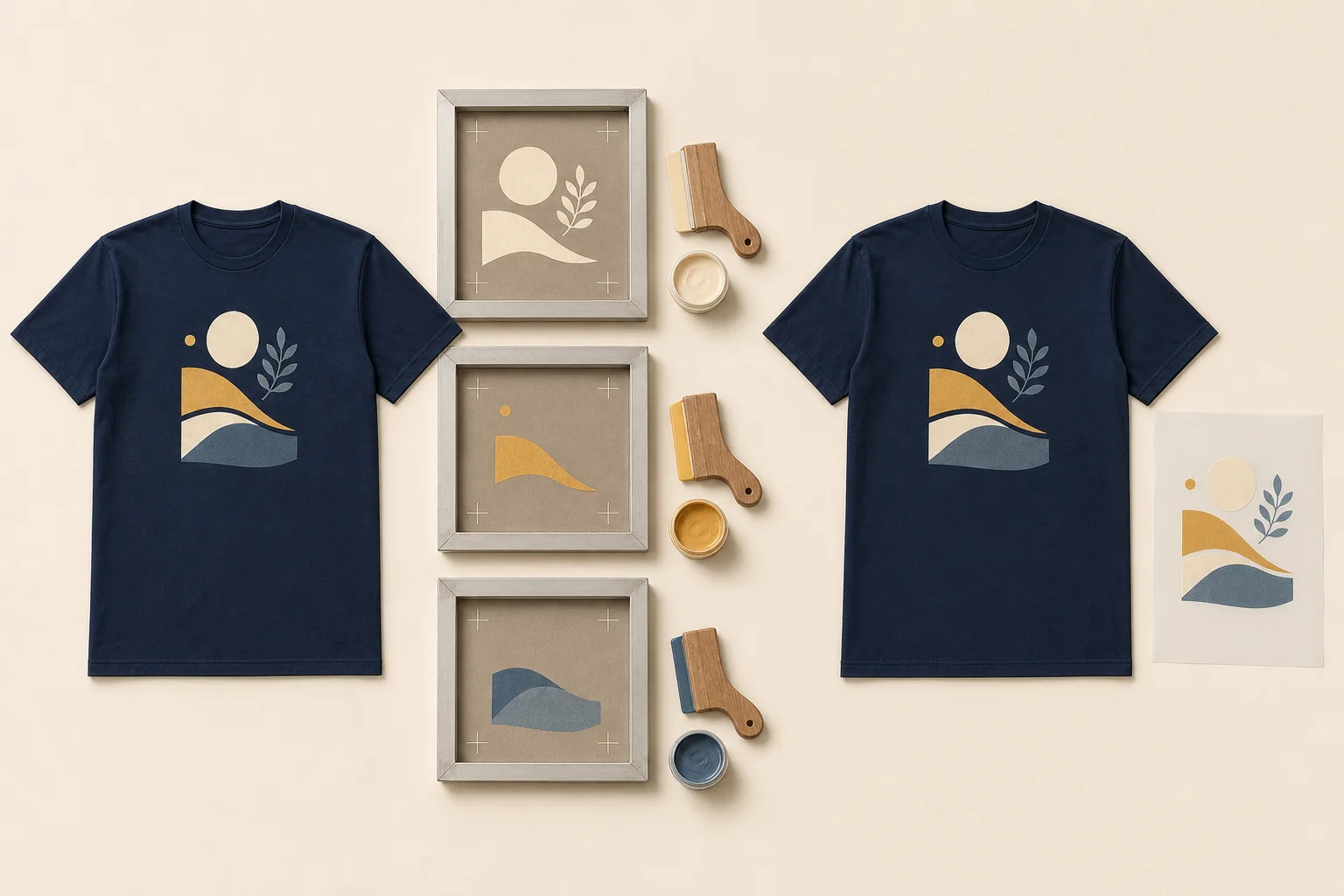
A simple one- or two-color repeat design and a detailed full-color design may favor different production methods. Screen printing can be efficient at volume but may prepare separate screens by spot color and location. Standard DTF prints the artwork together without separate color screens, while print dimensions, coverage, garment, quantity, and placement still affect the quote.
If you are comparing domestic and overseas suppliers, use the delivered-cost comparison to keep the garment, decoration, quantity, import scope, and required date identical in both written quotes.
When ordering 100 makes sense
- The extra shirts have named recipients or a defined role. Staff, volunteers, late signups, future members, replacements, or fundraiser inventory can justify the added budget.
- The group has confirmed the size demand. A quantity break does not help if the added pieces are concentrated in guessed sizes.
- Both quotes use the same specification. A cheaper 100-piece quote is not comparable if it quietly changes the garment, artwork size, delivery scope, or schedule.
- The event has enough runway. Start about 5–6 weeks ahead so the group can approve artwork, collect sizes, compare totals, and preserve the written delivery plan.
How Togethread prices 50 and 100 pieces
Togethread quotes start at 50 coordinated pieces. When 50 and 100 are both realistic, we can show them as separate delivered totals using the same confirmed garment, decoration dimensions and locations, size range, personalization, destination, freight, duty and tax scope, and delivery plan. Standard DTF has no separate physical screen for every artwork color; embroidery follows stitch area, density, and placement. You approve the free first mockup and written quote before production, then review finished-order photos before the balance.
FAQ
Is 50 shirts enough to get a bulk price? Yes. Togethread production quotes start at 50 coordinated pieces. Mixed sizes may count toward the minimum, while garment and size-dependent cost differences are confirmed in writing.
Is 100 always cheaper than 50? The unit price is often lower, but the total order cost is higher. Compare the added budget with the effective cost and actual use of the extra 50 shirts.
Does adding more artwork colors raise the price? It depends on the method. Screen printing may add preparation by spot color and location. Standard DTF does not require a separate physical screen for every artwork color, but print size, coverage, locations, garment, quantity, and personalization still matter.
Can I mix youth, adult, and extended sizes? Often yes, but availability and blank cost can differ. Confirm the actual size list and any cost change instead of assuming every size uses one base price.
How can I estimate before requesting a quote? Use the custom shirt cost calculator for a planning range, then compare written 50- and 100-piece totals with the quantity-break calculator.