Short answer: A planned bulk route fits a multigenerational trip, cruise group, destination reunion, or several families traveling together when the real named roster reaches 50 or more pieces. Lock the exact garments first, keep one row per traveler, appoint one payment and approval owner, and confirm the in-hand date in writing. If only one household or a small friend group needs shirts, use a local or no-minimum route instead of ordering unwanted extras.
Matching travel shirts can make a large group easier to recognize and give the trip one visual identity. They work best when the design, colors, sizes, payment responsibility, and delivery plan are controlled before production—not when every traveler is offered an open catalog.
1. First decide whether a 50+ bulk order fits
Count named recipients and defined trip roles, not speculative extras. A coordinated bulk order can make sense for:
- an extended family cruise or destination reunion;
- several households sharing one trip identity;
- travelers plus hosts, welcome crew, or event staff with real recipients; or
- one large itinerary that needs adult, youth, and available extended sizes.
A typical household vacation or small bachelorette trip is usually better served by a local printer or no-minimum provider. The no-minimum vs bulk path chooser helps make that decision before the group spends time collecting a 50-piece roster.
2. Use an original design with few variables
The clearest travel-shirt brief usually combines two or three elements:
- family or trip name;
- destination or meaningful place; and
- year or travel date.
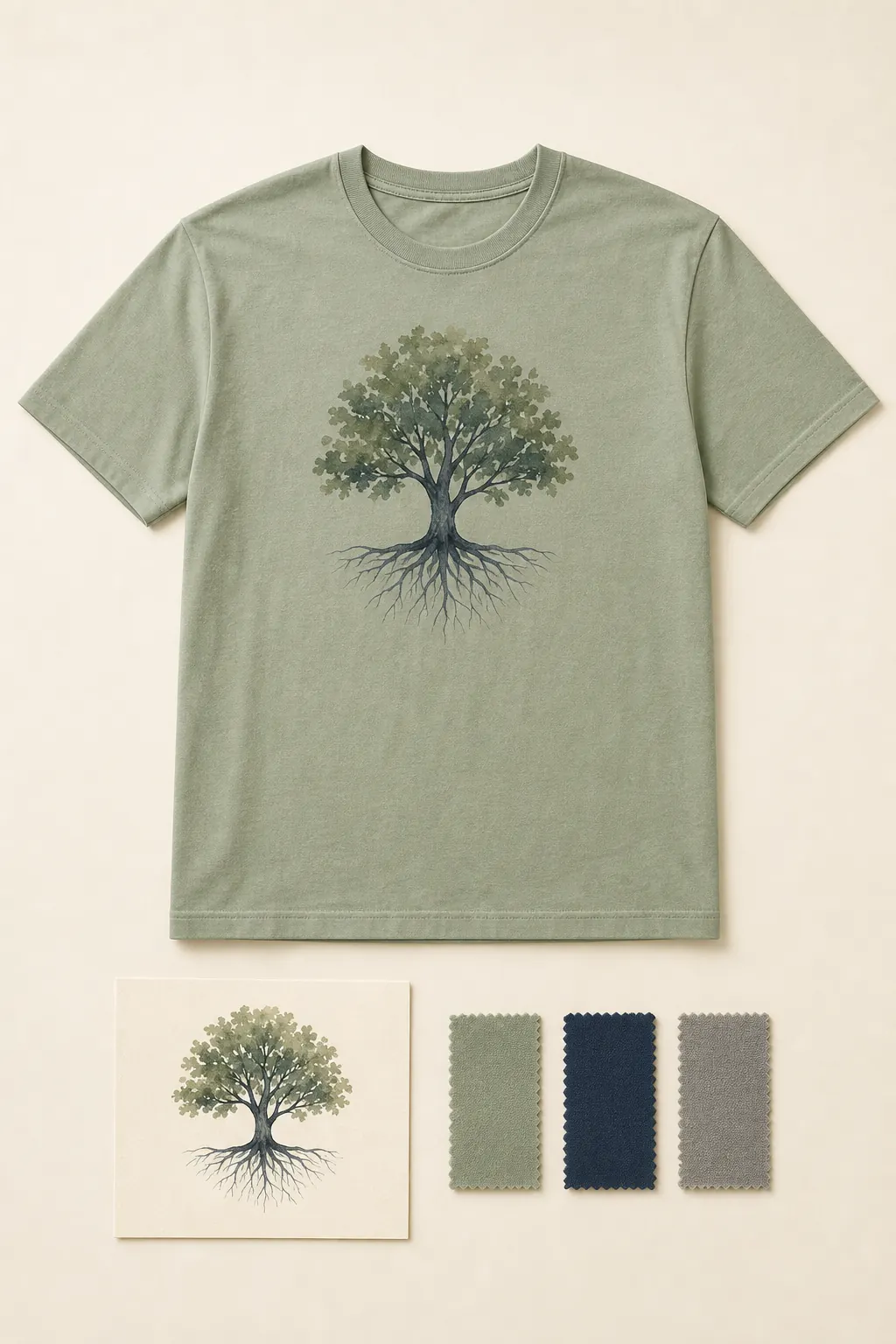
An original shoreline, mountain, compass, route, landmark, or family symbol can give the group a recognizable mark without copying a theme-park character, cruise-line logo, sports mark, or other artwork the group does not control.
Keep the hierarchy simple enough to review at the intended print size. A digital mockup should show the actual garment color, artwork dimensions, and placement; a thumbnail alone cannot prove that small words or thin lines will reproduce clearly.
3. Build one named garment-and-size roster
Family orders can span youth, adult, and available extended sizes, but a letter size is not a measurement. Lock the exact garment first, then use that product’s body-width and body-length chart for every person.
Keep one row per traveler and item with:
- traveler name;
- exact garment and catalog color;
- size and quantity;
- household or family branch, when needed;
- personalized name or role, when approved; and
- payment status only if the chosen collection route requires it.
Treat youth S/M/L as product labels—not ages, grades, or universal measurements. Review the smallest youth and largest adult or extended size before approval. If the group needs toddler, infant, or bodysuit garments, confirm a separate supplier route instead of assuming they are part of the standard catalog.
4. Keep colors and garment choices controlled
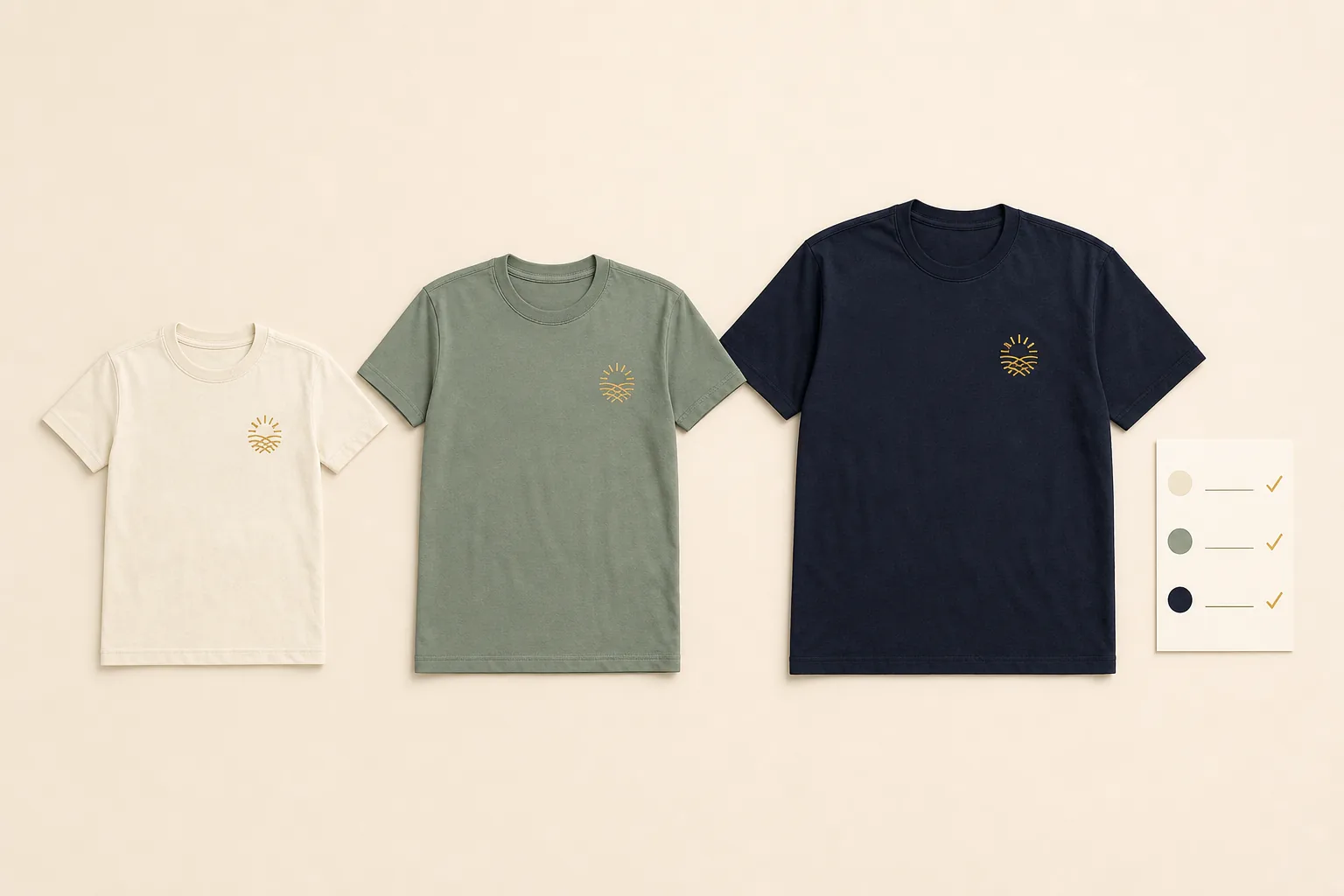
One garment color is the simplest option. Two coordinated colors can work when they have a purpose, such as two family branches or one light and one dark route. Every produced colorway still needs its own artwork review because the same mark can behave differently on navy, cream, sage, or performance fabric.
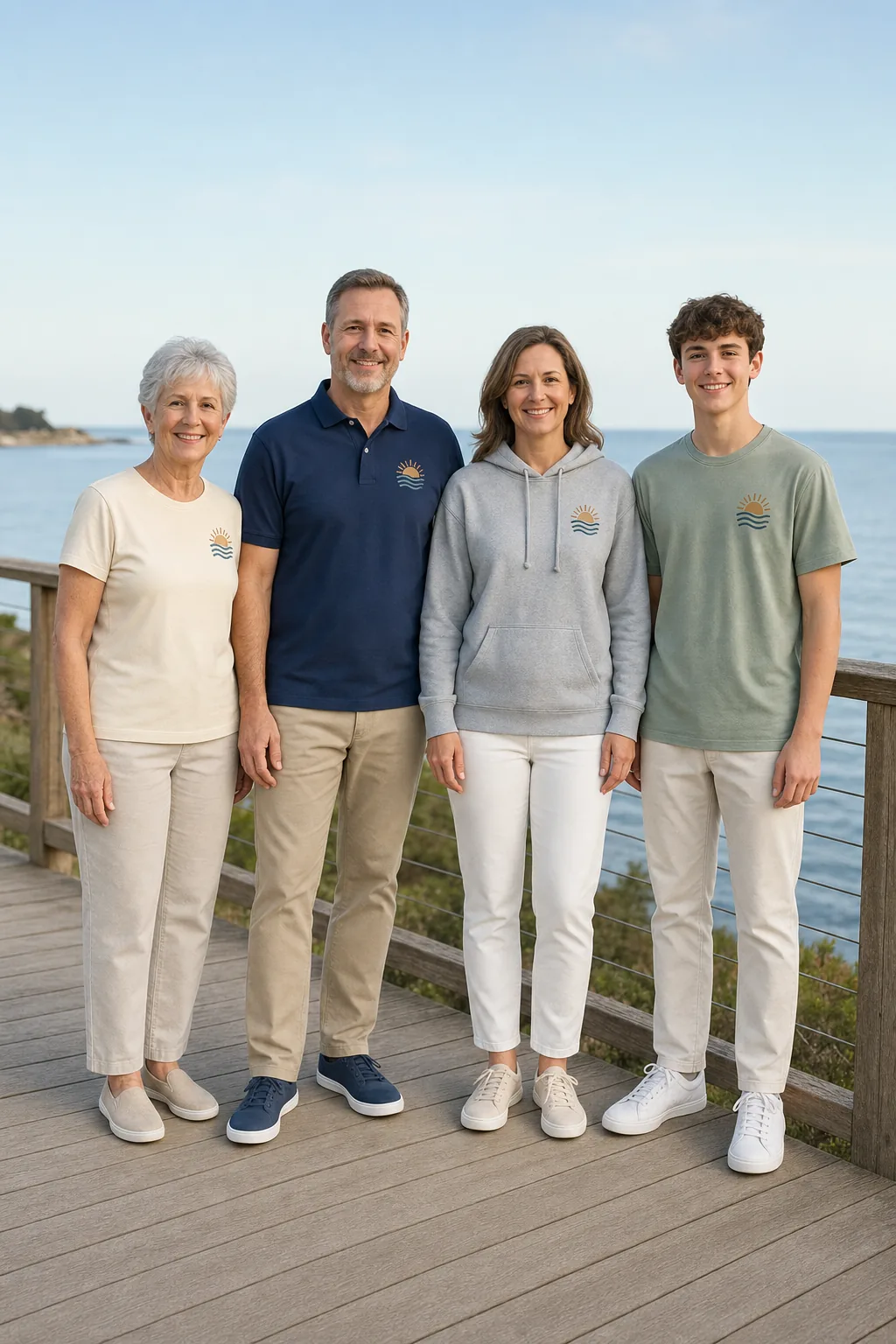
Limit the group to one or two garment routes—for example, a classic tee plus a hoodie for cooler travel days. Record each garment separately instead of treating “Medium” as a complete order line. The written quote should identify which garments, colors, sizes, decoration methods, and variations count toward the coordinated minimum.
5. Name one payment and approval owner
One organizer should own the supplier conversation, final roster, approved mockup, written quote, delivery address, and payment schedule. That does not mean the organizer must personally absorb every cost; it means the group knows which payment route is actually supported before anyone sends money.
Provider workflows differ. For example, Custom Ink’s current Group Order Form instructions describe a provider-specific way to collect sizes and online or offline payments. Do not assume another supplier offers the same participant checkout. For Togethread, confirm the invoice owner, deposit, balance, destination, and whether any participant-level collection is available in the written quote.
Avoid mixing personal transfers, screenshots, paper notes, and supplier records as competing sources of truth. If relatives reimburse the organizer, keep that private family accounting separate from the final production roster.
6. Work backward from the in-hand date
Start planning about six weeks before departure. The useful date is when the organizer must have the shirts in hand—not the flight, sailing, or event date itself.
Before production, the written schedule should identify:
- the complete brief and first-mockup timing;
- the final roster and artwork approval deadline;
- production and quality-check scope;
- destination and delivery method; and
- the confirmed in-hand range plus any exception.
If departure is inside five weeks, compare a domestic or local route unless the complete approval-to-delivery schedule is confirmed in writing. A generic “rush” label is not a substitute for the exact garment, quantity, artwork status, destination, and required date.
How Togethread handles large family travel orders
Togethread plans coordinated orders from 50 pieces, with compatible adult and youth sizes and approved garment routes able to share one visual system when the written quote confirms the structure. One organizer receives the mockup, garment-and-size breakdown, price scope, destination, delivery plan, and first-mockup timing before production.
The organizer approves the artwork and final list, reviews finished-order photos before the balance, and receives the coordinated shipment at the confirmed address. Garment changes, youth or extended sizes, multiple colorways, personalization, freight, duty and tax scope, and schedule exceptions remain explicit line items rather than hidden assumptions.
FAQ
We’re under 50 people. Should we add extras to reach the minimum?
No. Use a local or no-minimum provider unless additional pieces have named recipients or a defined trip role. Do not create speculative inventory only to reach a quantity threshold.
Can each household use a different shirt color?
Sometimes. Keep one shared design system, list every color by person, and confirm stock, decoration compatibility, quantity per color, artwork version, and price difference in writing.
Can travelers choose between a tee, hoodie, and polo?
Compatible garments can sometimes share a coordinated order, but each product has its own size chart, blank price, decoration area, and artwork review. Limit the menu and list every garment separately.
Does a digital mockup confirm physical fit?
No. A digital mockup does not verify physical fit; it confirms artwork direction and placement. Use the exact garment chart, collect measurements directly, and request a sample or local try-on route when fit risk is high.
Can every traveler pay the supplier separately?
Only when the chosen provider and written quote explicitly support participant checkout. Otherwise use one invoice owner and keep family reimbursements separate from the production record.