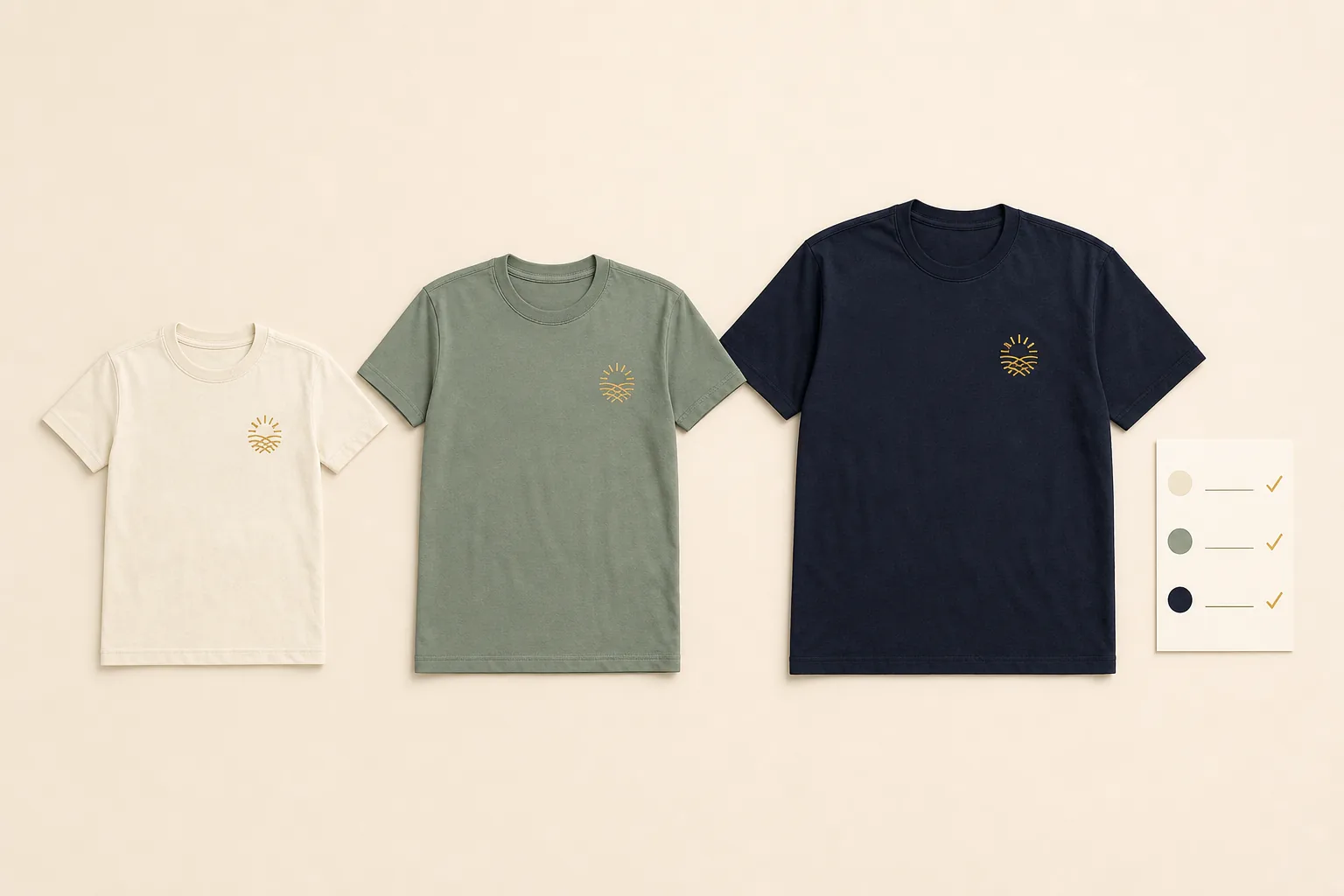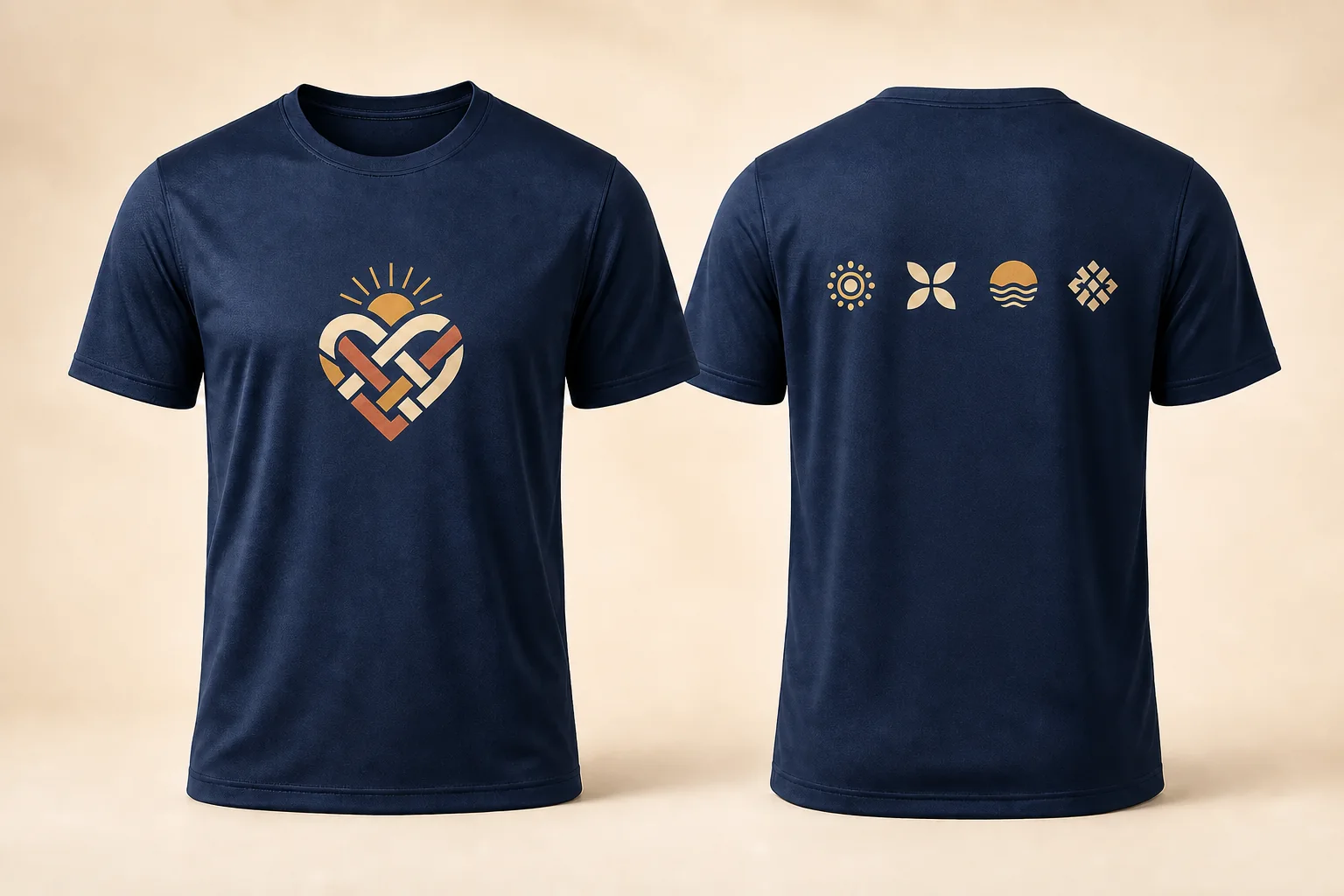
Short answer: Set a net-proceeds goal, get the complete delivered cost for one exact shirt specification, choose how orders and payments will be collected, and use paid preorders to establish demand before locking the production quantity. Track payment fees, refunds, distribution, and any unsold inventory separately—gross shirt margin is not the same as final money available to the cause.
Start with net proceeds, not a promised margin
Use three separate numbers:
Gross contribution per paid shirt = selling price − complete delivered shirt cost
Net contribution per fulfilled shirt = gross contribution − payment/platform fees − per-order packaging or distribution cost − expected refunds or discounts
Campaign net proceeds = fulfilled paid orders × net contribution + separate donations − fixed campaign costs − unsold inventory cost
Bonfire’s current base-cost guidance makes the same first distinction: selling price minus base cost is profit on its platform, while base cost changes with the product, print colors, print sides, and quantity. For a direct bulk order, use the supplier’s complete delivered shirt cost instead of a platform base cost, then subtract the expenses your organization still carries.
A planning example—not a price promise
Suppose 100 paid orders produce a $7.50 gross contribution per shirt. That creates $750 before other campaign costs. If payment, packing, refunds, and fixed expenses total $125, projected net proceeds are $625.
Change any input and the result changes. Use the fundraiser margin calculator for the first gross-contribution estimate, then subtract the campaign costs it does not collect.
Step 1 — Choose the fulfillment route before setting the price
| Route | Useful when | Cost and cash-flow check |
|---|---|---|
| Coordinated bulk preorder | One organizer can collect orders, submit one size list, and receive one delivery | Confirm the production minimum, deposit timing, complete delivered total, payment fees, sorting, and refunds |
| Print-on-demand campaign | Supporters need individual checkout and the provider handles production and fulfillment | Confirm product base cost, platform or donation fees, payout timing, shipping charged to buyers, and campaign rules |
| Local preorder and pickup | The date is tight or local pickup reduces delivery risk | Confirm current stock, rush charges, pickup date, payment collection, and the shop’s minimum |
Togethread supports the first route: one coordinated order from 50 pieces and one consolidated delivery. It is not an individual-checkout fundraising storefront. Use the no-minimum vs bulk chooser if the paid-order estimate may fall below that threshold. School organizers who also need district approval, a treasurer-controlled payment process, and teacher or homeroom distribution can use the PTA/PTO spirit-wear checklist before opening the preorder.
Step 2 — Lock one sellable shirt specification
Before choosing a selling price, confirm:
- Exact garment, fabric, color, and size range
- Artwork dimensions and front, back, or sleeve locations
- Decoration method and any personalization
- Ordered quantity and named size list
- Delivery destination, freight, duty and tax scope, and required date
A cause-led design still has to be wearable after the event. Keep the cause name or mark easy to recognize, make sponsor information subordinate to the main idea, and test any donation QR code at its intended print size. Use the front-and-back fundraiser shirt planner before requesting the final quote.
Step 3 — Set the selling price from the audience and complete cost
There is no universal fundraiser-shirt selling price. Compare:
- The complete delivered cost for the exact specification
- What this specific audience is likely to pay for the garment
- The intended gross contribution per paid shirt
- Payment, platform, packing, distribution, refund, and tax-related costs
- The minimum number of paid orders needed to cover fixed costs and reach the goal
Show the organizer both total campaign cash required and projected net proceeds. A lower garment cost can improve the result, but only when the compared quote keeps the same garment quality, artwork, quantity, size range, delivery scope, and date.
Step 4 — Use paid preorders to reduce—not erase—risk
A paid preorder window is useful because it replaces a guess with named demand. It does not guarantee zero risk. Late refunds, chargebacks, unpaid commitments, processor payout delays, minimum shortfalls, size mistakes, production changes, and optional day-of inventory can still affect the result.
Use one clear policy:
- Publish the approved mockup, exact garment, size chart, selling price, order deadline, estimated distribution date, and refund terms.
- Collect payment with the order instead of treating a verbal promise as demand.
- Keep the window open long enough for the real audience to respond; do not assume two weeks fits every school, church, or nonprofit.
- Close the list, reconcile paid orders, resolve missing sizes, and lock one production roster.
- Add day-of stock only from prior sell-through, named needs, reusable design life, and a budget the organization can leave in inventory.
If the paid count does not reach the chosen production route’s minimum, extend the campaign, choose a no-minimum route, or refund according to the published policy. Do not buy filler sizes just to preserve a projected margin.
Step 5 — Protect the arrival and distribution date
Plan backward from when supporters need the shirts, not only from the event start. Allow time for internal approval, preorder collection, final sizes, proofing, production, delivery, counting, and distribution.
For Togethread, use about 5–6 weeks of total planning runway. Its standard 15–20-business-day approval-to-destination range is a planning range, beginning only after the current mockup, order details, deposit, and written delivery plan are confirmed. The written order date is the commitment. If that runway is unavailable, compare a domestic option rather than depending on an unconfirmed rush.
Step 6 — Keep merchandise sales and donations clear
Do not describe the full shirt payment as a tax-deductible donation without qualified guidance. The IRS explains that when a donor receives goods or services, the potentially deductible portion is generally limited to the amount above the fair market value of what was received, and disclosure rules can apply. Tax and reporting treatment depends on the organization and campaign; confirm it with the organization’s accountant or adviser.
How Togethread supports a coordinated fundraiser order
Togethread plans one consolidated order from 50 pieces. A designer reviews the brief and confirms the free first-mockup timing in writing. The written quote confirms the garment, quantity, size range, print dimensions, locations, personalization, destination, delivery scope, and current price. Nothing prints until the organizer approves the mockup and order details; finished-order photos are shared before the balance. The bulk fundraiser-shirt route keeps those decisions in one order path.
FAQ
How much profit will a T-shirt fundraiser make?
There is no reliable universal amount. It depends on paid demand, the exact shirt cost, selling price, payment and platform fees, refunds, campaign expenses, donations, and unsold inventory.
Do paid preorders eliminate inventory risk?
They reduce demand uncertainty. Risk remains if the campaign adds unreserved stock, receives refunds or chargebacks, misses the production minimum, or locks incorrect sizes.
Do we need money before placing the order?
For a coordinated bulk order, a deposit starts production. Many organizers collect paid preorders first, but payout timing and refund obligations still need to match the supplier’s payment schedule.
What if we do not reach 50 paid orders?
Togethread’s coordinated route starts at 50 pieces. Extend the campaign, use a local or no-minimum provider, or follow the published refund policy rather than ordering unwanted inventory.
Is the shirt purchase tax deductible?
Do not assume the full payment is deductible. When goods are received, only a qualifying excess above fair market value may be treated as a contribution; the organization should confirm current rules and disclosures.