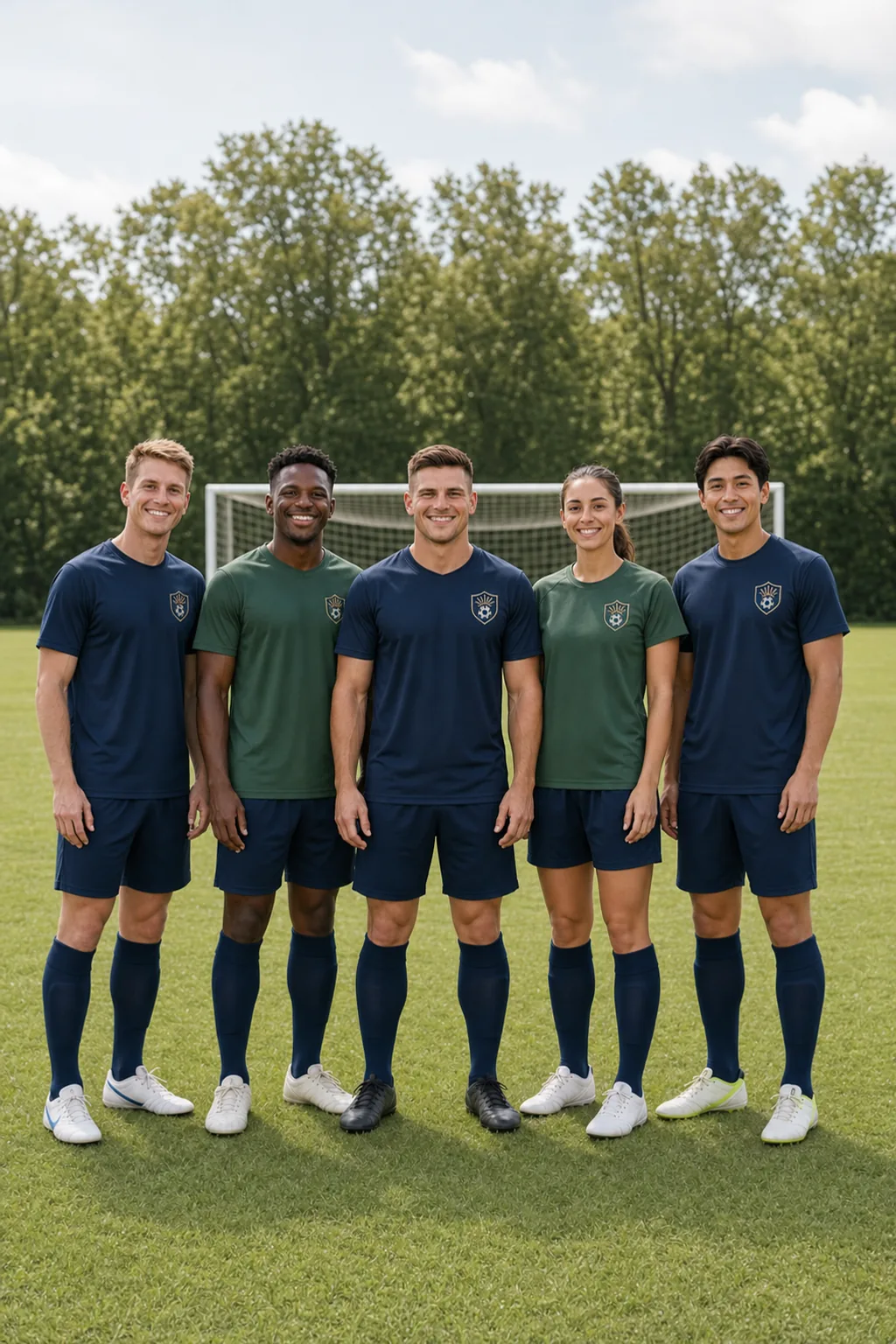
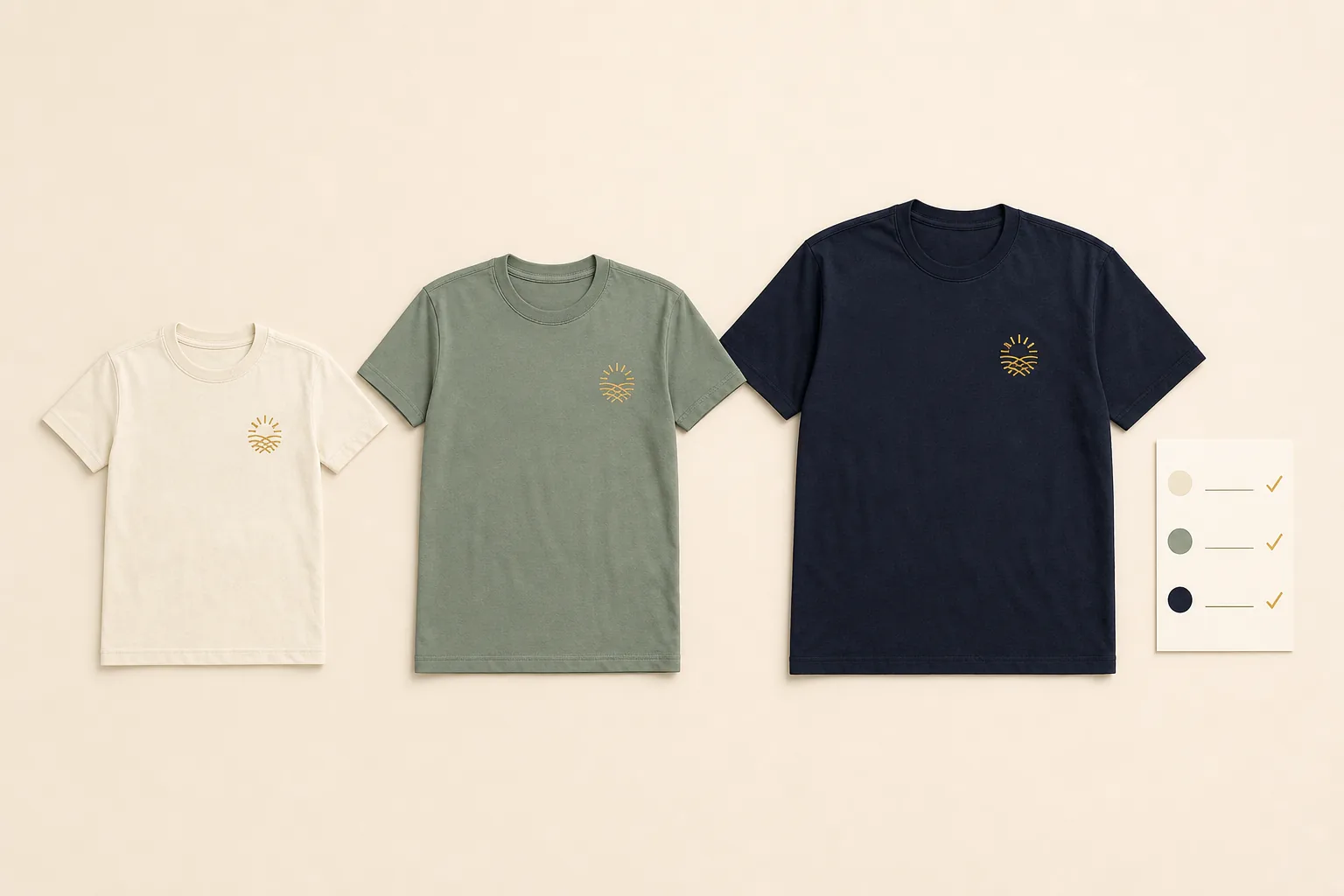
Short answer: Use the free roster builder above to collect each player’s name, print name, number, exact garment size, and role in one sheet. It flags duplicate numbers and missing details, then downloads a CSV for Excel or Google Sheets. Before approval, match every player to the selected garment’s own measurement chart and review the smallest and largest roster sizes in the mockup.
Whether you’re outfitting a recreational softball league, a school track team, or a corporate sports day, getting the shirts right comes down to three things: fabric, information, and timing. Here’s how to handle all three.
1. Jersey vs. t-shirt: which is right for your sport?
Not every team needs a traditional cut jersey. Here’s a quick guide:
| Sport type | Best option |
|---|---|
| Running, cycling, fitness events | Performance tee (moisture-wicking, lightweight) |
| Softball, volleyball, recreational leagues | Performance tee with names and numbers |
| Basketball, soccer | Performance shirt plus team shorts; confirm league uniform rules |
| Corporate sports day, fun run | Heavyweight cotton or performance tee |
| Swimming | Not a shirt category — different supplier needed |
For most recreational and school teams, a custom performance shirt with printed names and numbers hits the right balance of cost, durability, and comfort. Compare coordinated team shorts when the group needs a complete warm-up or practice set, then request the exact kit mockup from that page.
2. What information you need from every player
Collect only the production details the supplier needs:
- □ Player name or organizer reference — for matching the roster row to the right person
- □ Name to print — exactly as it should appear on the garment, including capitalization
- □ Player number — confirm no duplicates
- □ Exact product size — use the selected garment’s own measurement chart
- □ Role — player, coach, staff, or unpersonalized extra
- □ Shirt color preference (if you’re offering a choice) — decide this at the team level, not individually
Keep phone numbers, medical or eligibility notes, addresses, and payment details out of the supplier roster. The apparel handoff needs one row per garment, not the team’s private operating record. Custom Ink’s current names-and-numbers instructions likewise require a complete name, number, and size list for accurate personalization pricing.
Use one file with these columns: Organizer reference | Name to print | Number | Product | Color | Size | Role. Version that file when something changes, then use the approved version for artwork review, pricing, receiving, and sorting.
3. Design considerations for team shirts
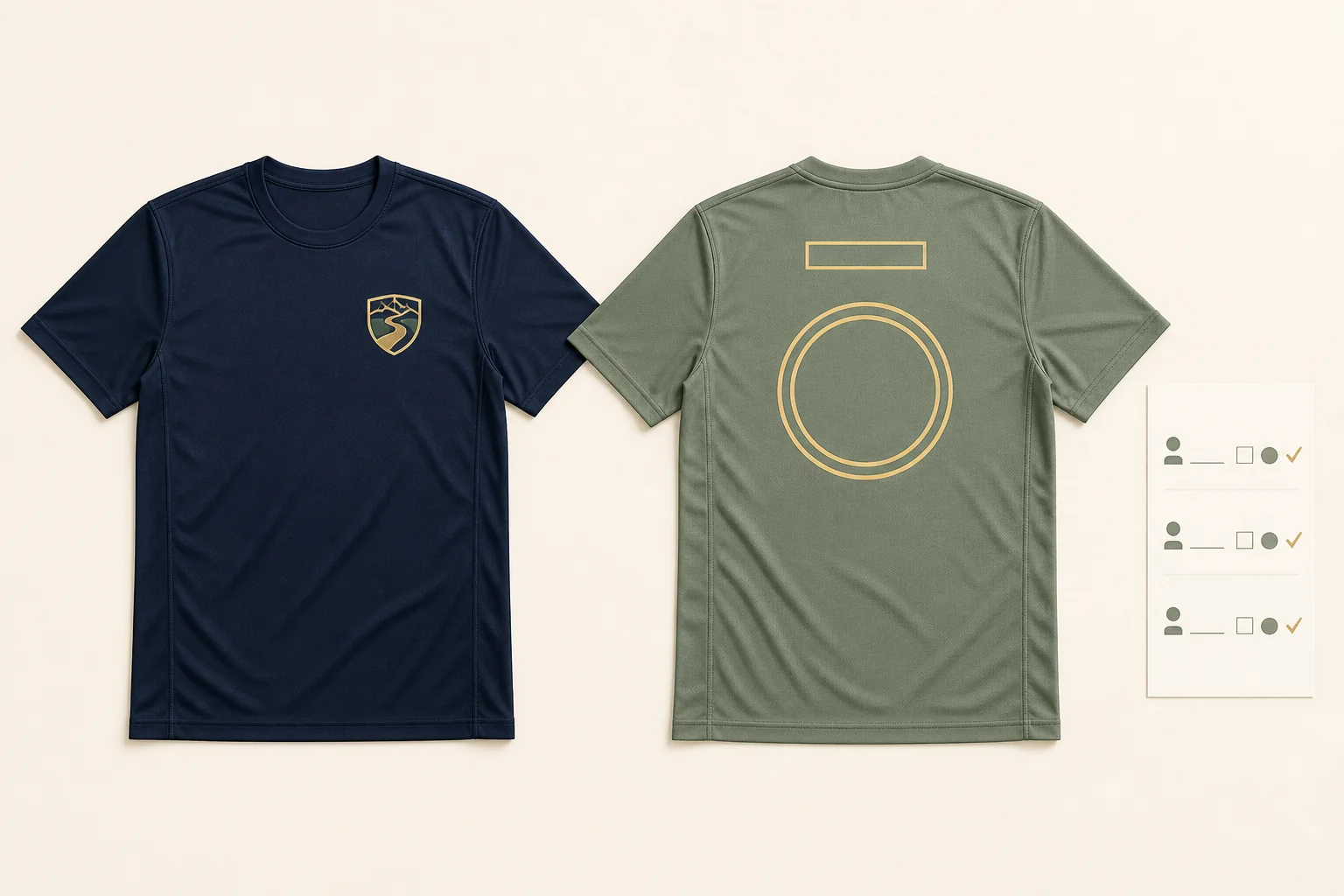
Front: Team name, logo, or mascot. Keep it readable from 20 feet — this is what people see during the game.
Back: Player name (top) and number (center, large). Set the scale from the printable area, viewing distance, garment size range, and any league rules. Review the smallest youth garment and largest adult garment rather than applying one fixed number height across the roster. Roster uniformity still matters — pick one font and placement system.
Sleeves: Optional team year or sponsor logo. Keep sleeves clean if you want a classic look. Use the logo size and placement guide to set a mockup starting point, then approve the actual printable area on the selected garment.
DTF prints artwork colors together without preparing a separate physical screen for each one. The garment, quantity, print dimensions, coverage, locations, white ink, and personalization can still change the decoration price, so confirm the complete specification in writing.
4. Decoration methods for names and numbers
Names and numbers are variable data: the shared crest may stay the same, but each personalized garment needs its own roster row and production check. Choose the method with the garment and artwork rather than assuming one method fits every team.
| Method | Strong starting point | Confirm before approval |
|---|---|---|
| Vinyl (HTV) | Bold one- or two-color back names and numbers | Film, stretch, heat compatibility, character size, and care instructions |
| DTF | Detailed or multi-color personalization on many light or dark garments | Print dimensions, white ink, hand feel, polyester dye migration, and heat test |
| Sublimation | Light high-polyester performance garments and integrated full-color graphics | Fabric composition, base color, opacity, exact panel or printable area, and league rules |
| Embroidery | Compact player, coach, or staff names on polos and substantial layers | Stitch area, letter height, fabric stability, backing, and placement |
The shared team logo and variable personalization can use different methods. For example, a front crest may use DTF while a simple back number uses vinyl. Approve one smallest-size and one largest-size example so the scale works across the roster.
How names and numbers are priced
Personalization is quoted per personalized item, but there is no universal flat fee. Ask the written quote to separate the base garment and shared artwork from the variable name, number, placement, and method. Character size, decoration dimensions, locations, garment, roster volume, and QC handling can all change the result. Use the complete team-jersey cost guide to compare suppliers on the same garment, roster, shorts, delivery, and rework scope.
5. Sizing for a mixed roster
Sports teams often have wide size ranges. Plan accordingly:
- Collect sizes individually — never guess
- Use the exact product measurement chart; fabric type alone does not tell you whether a garment runs small or large
- Compare body measurements with garment measurements and the intended fit before anyone changes size
- Plan extras by likely roster changes, exact sizes, assigned numbers, and whether an undated spare can be reused; do not default every team to generic M/L extras
- Confirm the exact size policy — standard adult sizes may share one base price, while youth or extended blanks can differ
6. Timeline and ordering sequence
- About 5–6 weeks out: Announce the uniform direction and collect player information
- Before approval: Lock the exact garment, measurement chart, names, numbers, sizes, artwork, and destination
- After written approval: Allow the confirmed approval-to-door schedule; Togethread’s standard planning range is 15–20 business days after the mockup, roster, quote, deposit, and delivery plan are approved
- Before the first game: Count every personalized piece against the roster, then sort and distribute
Do not treat the first mockup as the start of production. The roster, garment, price, destination, and written delivery plan also need approval before the schedule is locked. Use the event deadline planner to protect time for roster corrections and team distribution outside the production range.
What the written team quote should cover
| Quote line | What must be written down |
|---|---|
| Coordinated order | Which performance shirts, tees, hoodies, polos, or team shorts count toward the 50+ minimum |
| Sizes | Product-specific youth, adult, and extended-size blanks plus any price differences |
| Personalization | Method, dimensions, location, and price for each name, number, role, or unpersonalized piece |
| Approval | The garment, artwork, smallest- and largest-size examples, complete roster, and first-mockup timing |
| Schedule and delivery | The approval-to-door date or range, destination, freight, duty and tax scope, and exceptions |
The first-mockup timing is confirmed in writing. After the mockup, roster, quote, deposit, destination, and delivery plan are approved, Togethread’s standard approval-to-door planning range is 15–20 business days. The order’s written date and scope—not the general range—control the actual commitment. Finished-order photos are reviewed before the balance.
Compare team apparel options →
FAQ
What’s the per-name and per-number charge? Names and numbers are quoted per personalized item. The exact amount depends on the decoration method, character size, placement, and total roster; do not assume an automatic volume reduction without seeing it in the written quote.
Can players have different shirt colors? Often, yes — for example, home (white) and away (navy) sets. Specify the color split and roster when requesting the quote; garment availability and any price difference are confirmed in writing.
What if a player joins after shirts are ordered? A late addition may require another order subject to the current minimum, garment availability, price, and schedule. If roster changes are likely, compare role-, size-, and number-specific spares with the supplier’s actual reorder terms before locking the first batch.