Short answer: Use a lightweight performance shirt for runners who will be moving continuously, especially in warm or wet conditions. Use a soft cotton or cotton-blend tee for a casual fun run, walk, volunteer shift, or keepsake-first event. A mixed event can use both garments if one cause mark and one color system keep the order visually connected.
A charity 5K often includes competitive runners, casual walkers, families, volunteers, and event staff. The best shirt depends on what each group will actually do—not only whether the fiber label says cotton or polyester.
Choose the shirt by role and activity
| Group | Useful starting point | Why |
|---|---|---|
| Timed runners or warm-weather participants | Lightweight performance tee | Faster drying and less retained moisture during sustained activity |
| Casual walkers or family fun-run participants | Soft cotton or cotton blend | Familiar feel and stronger everyday-keepsake appeal |
| Active setup, course, or cleanup volunteers | Performance tee | Better suited to repeated movement and outdoor work |
| Check-in, hospitality, or sponsor-table volunteers | Cotton tee or polo | Comfortable for lighter activity and easier role distinction |
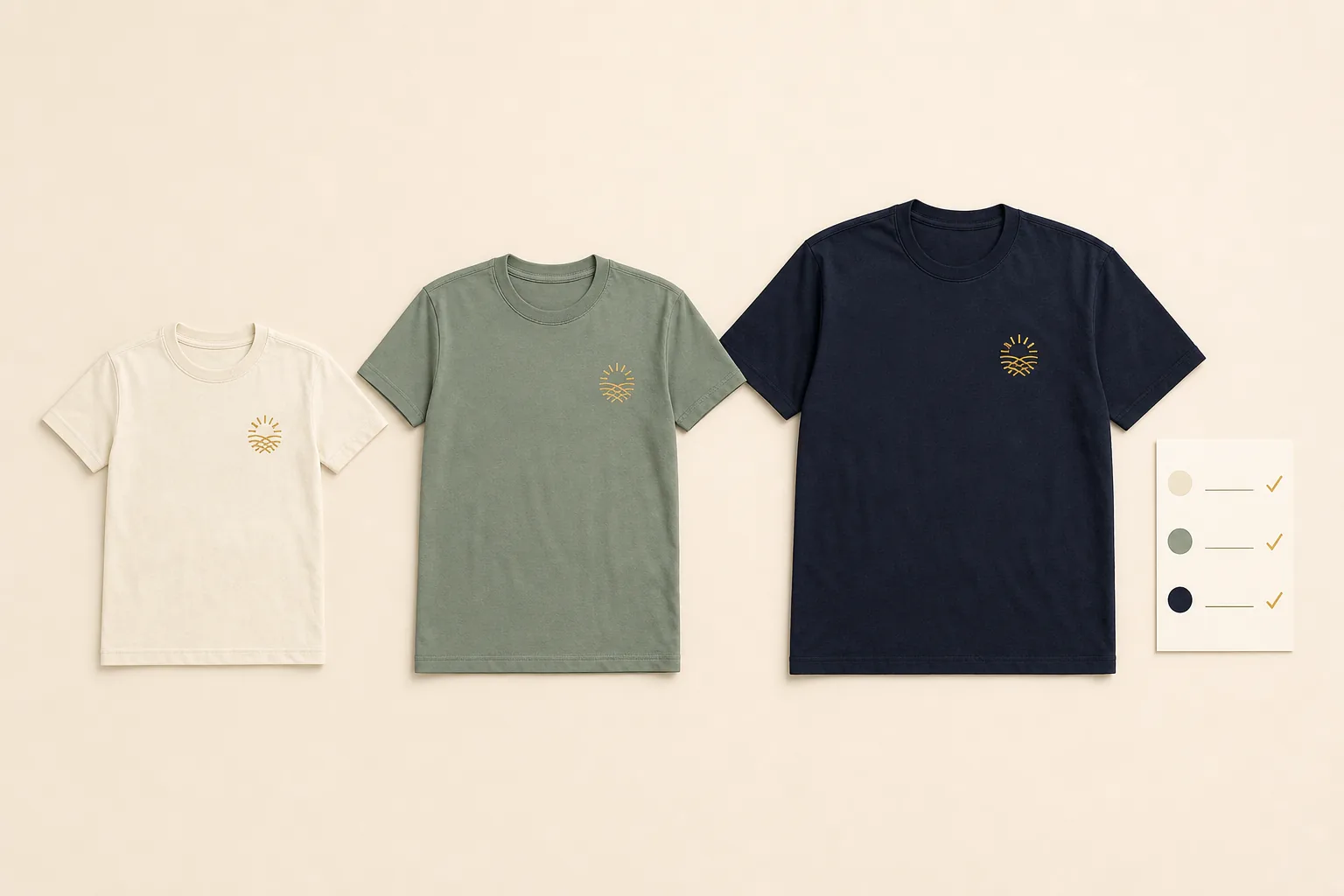
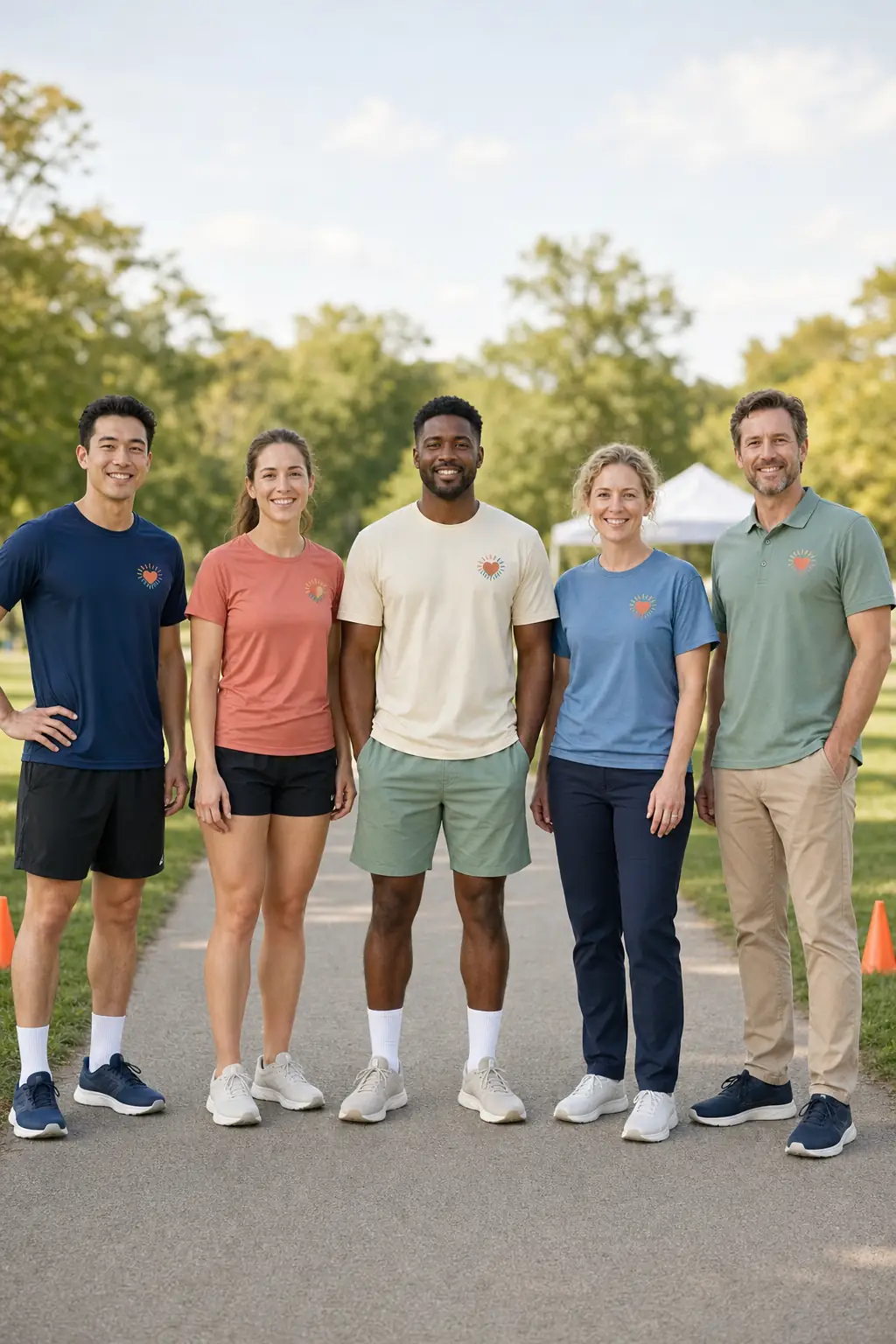
If one event uses two garments, keep the same cause mark, base palette, and sponsor hierarchy. Change the garment for the role without inventing a second unrelated design. The volunteer-shirt planning guide shows how to keep role labels visible without creating a second visual system.
What makes a performance shirt useful for running?
Polyester usually absorbs less water and dries faster than cotton, but 100% polyester does not automatically mean moisture-managing. Knit structure, yarn, finish, fabric weight, airflow, opacity, stretch, and seams all affect how a shirt feels during a run.
Ask for the actual garment specification and confirm:
- whether moisture management is stated by the manufacturer;
- fabric weight and knit structure;
- opacity in the chosen light color;
- size range across youth and adults;
- snag resistance for repeated volunteer or race use; and
- compatibility with the planned decoration method.
REI’s current running-clothing guide also identifies moisture wicking, quick drying, ventilation, seams, and weather as practical running-apparel considerations. Treat these as garment-level checks rather than assuming every polyester blank performs the same way. Compare the exact route in the bulk performance-shirt guide.
When cotton or a blend is the better 5K shirt
Cotton remains useful when the event is primarily a walk, community gathering, school fundraiser, or keepsake. It has a familiar hand feel and can be easier to wear casually after race day. A cotton-poly blend can sit between a classic cotton tee and a technical race shirt, but the exact blend still needs its own fit and decoration review. Use the fabric chooser to compare those routes on one specification.
Do not force every person into the same garment only to simplify the catalog. Simplify the visual system instead: one cause mark, one palette, one approved sponsor layout, and a controlled role label where needed.
Match the print method to the fabric
There is no single best decoration method for every race shirt.
- Sublimation works on compatible light, high-polyester garments and can keep large artwork integrated with the fabric.
- DTF can reproduce detailed full-color cause art and sponsor marks on many light or dark garments, but heat sensitivity and dye migration must be checked on the exact blank.
- Screen printing can suit simpler spot-color artwork at larger quantities; compare setup, ink coverage, and print feel on the same specification.
Ask the supplier to confirm the exact garment and decoration combination, then review a realistic-size proof. If the back carries several sponsor marks, use the front-and-back charity shirt planner before collecting artwork.
Keep runners, volunteers, and sponsors readable
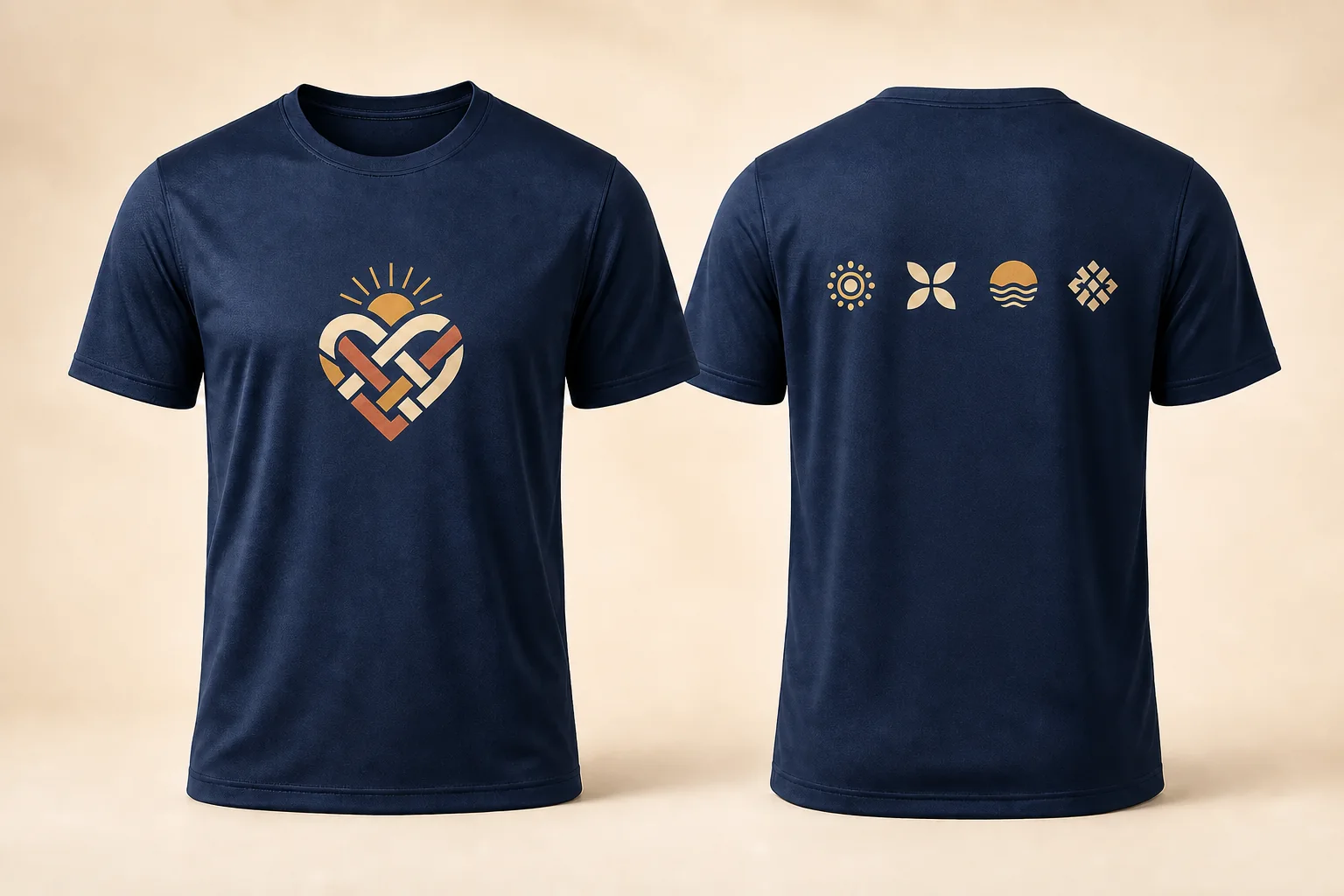
Use the front for one clear event or cause mark. Put a sponsor grid on the back only after the organizer has confirmed every file and the sponsor hierarchy. Keep VOLUNTEER, STAFF, or another operating role separate from the sponsor grid so it remains readable in a crowd.
Collect each person’s role, garment, color, and size in one roster. A runner in a performance tee and a volunteer in a cotton tee should appear as separate garment rows even when both share the same artwork. The free group order-form builder keeps that distinction visible before production.
Start about 6–8 weeks before the event when sponsor files, registration sizes, or committee approval are still moving. Confirm the actual approval deadline, production plan, and delivery date in writing rather than treating a general timeline as a guarantee.
How Togethread supports fundraisers
Tell us whether the event is a timed race, fun run, walk, or mixed program; how many runners and volunteers are expected; and which sponsor files must appear. A designer can compare a performance, cotton, or controlled mixed-garment route and lay out the cause mark, roles, and sponsor grid in one mockup. The bulk fundraiser-shirt route keeps the event, roster, and delivery scope together.
The free first-mockup timing is confirmed in writing after the brief is reviewed. Mixed sizes can count toward the coordinated 50-piece minimum; youth and adult ranges, garment compatibility, print dimensions, sponsor placements, destination, and delivery scope are confirmed in the written quote before production.
FAQ
What fabric is best for a 5K race shirt? For participants who will run continuously, start with a lightweight performance shirt whose manufacturer specifies moisture management and quick drying. For a casual walk, volunteer shift, or keepsake-first event, cotton or a blend may be more appropriate.
Can runners and volunteers wear different shirts? Yes. Keep one cause mark and palette, then use a performance shirt for active participants and a cotton tee or polo for lighter-duty volunteers when that helps the event. Record the garment on every roster row.
Will sponsor logos cost extra in full color? It depends on the supplier and print method. Some digital methods are not priced per color, while screen printing may add screens or setup by color. Compare the complete decorated price for the same garment and artwork.
Can we order different sizes for runners and kids? Yes. Youth and adult sizes can count toward one coordinated 50-piece minimum. The written quote identifies any youth, extended-size, garment, or decoration differences before production.
How early should a charity 5K shirt order start? About 6–8 weeks is a useful planning runway when sponsor files, registrations, and approvals are still open. Confirm the exact mockup, roster, production, and delivery deadlines in writing for the specific event.