Short answer: Give volunteer shirts one clear job: help guests identify the right people. Use one shared event or organization mark, add a simple role label where needed, choose the garment for the actual work, and collect named sizes before you estimate extras. Start about 5–6 weeks before the event so the team can review the design and delivery date without rushing.
A volunteer shirt is part uniform, part wayfinding, and part thank-you. It should make the team easy to find without turning each person into a crowded signboard. The most useful plan is usually a small, repeatable system rather than a different design for every role.
Decide what the shirt needs to do
Before choosing colors or artwork, agree on the primary job:
- Identify helpers — guests can quickly find someone who can answer a question.
- Separate roles — volunteers, coordinators, staff, and participants are distinct when the event needs it.
- Unify the team — everyone shares one visual identity in photos and public-facing spaces.
- Work after the event — an undated design can be reused for future service days or worn casually.
Most groups need the first and third jobs. Add role separation only when it helps the event operate more smoothly.
Build one role system, not several unrelated shirts
Start with one core mark and one garment-color family. Then vary only the information that needs to change.
| Group | Simple identifier | Useful when |
|---|---|---|
| General volunteers | VOLUNTEER | Guests need to find any helper quickly |
| Team leads | TEAM LEAD or a distinct shirt color | Leads handle escalation or assignments |
| Check-in staff | CHECK-IN on the back | The entrance has a dedicated registration team |
| Participants | Event mark without a role word | Participants and helpers wear related apparel |
Keep the organization or event mark consistent across every role. A different back label or one controlled color change is usually enough. Multiple logos, typefaces, and unrelated shirt colors make the team harder—not easier—to recognize. For a walk or run, the front-and-back charity layout guide keeps the cause, sponsor, and volunteer information in one hierarchy.
Choose the garment for the actual work
Do not choose by appearance alone. Consider temperature, movement, formality, and how long each shift lasts.
Classic T-shirt
A cotton or cotton-blend tee is a practical starting point for indoor events, community service, food drives, registration desks, and moderate activity. It feels familiar, accepts a wide range of decoration, and is easy to reuse.
Compare bulk classic T-shirt options →
Performance shirt
A lightweight performance shirt is better for charity runs, outdoor setup, summer events, cleanup crews, and active shifts. Ask about fabric weight, stretch, hand feel, and moisture management; “polyester” by itself does not describe the full wearing experience. The fabric chooser helps compare this route with cotton and blends on the exact use.
Compare bulk performance shirts →
For a run/walk event that also includes casual participants, use the charity 5K shirt guide to separate performance, cotton, and volunteer routes without splitting the event identity.
Polo shirt
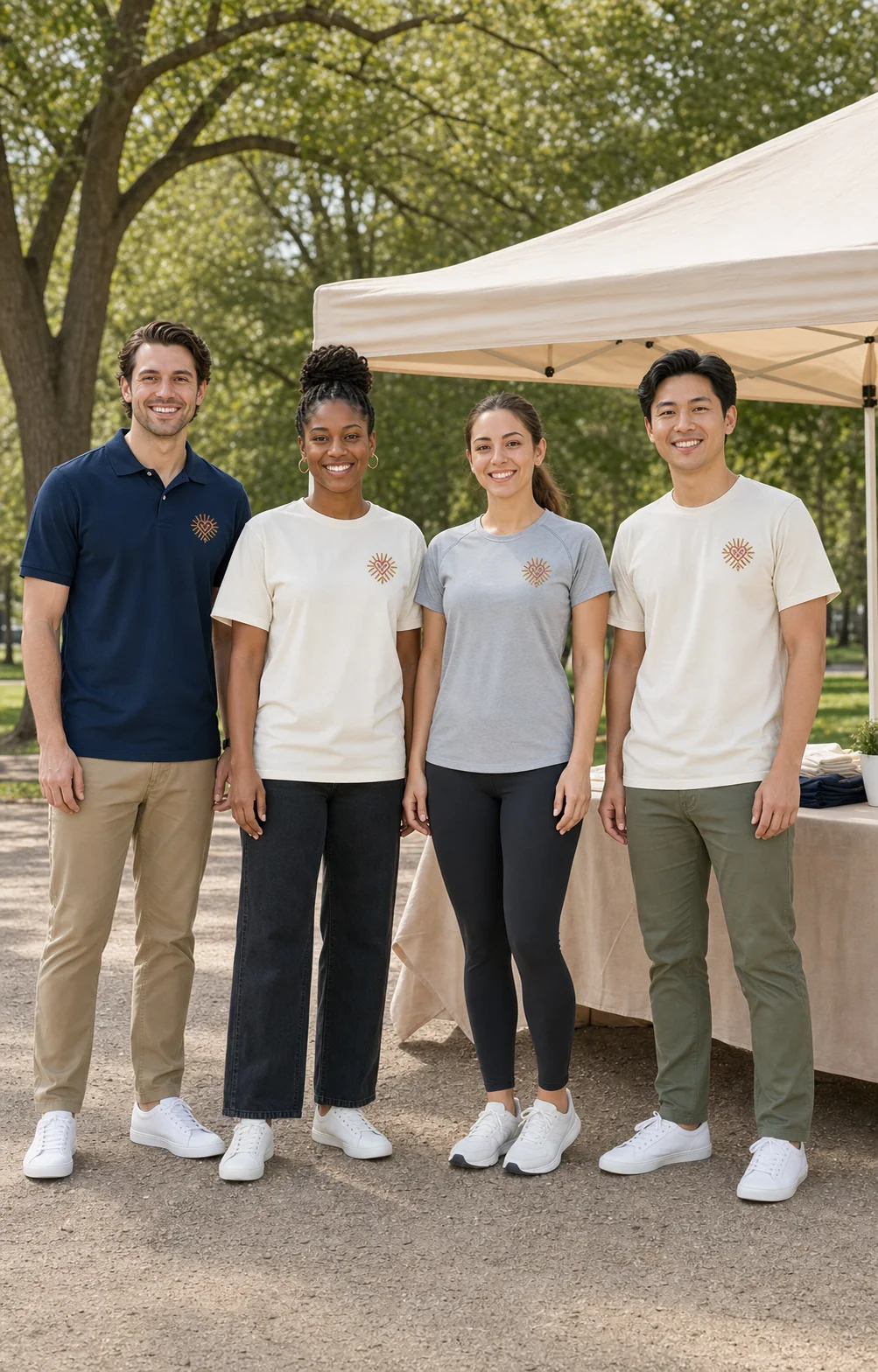
A polo gives greeters, coordinators, information-desk teams, and company volunteer groups a more polished look. A small left-chest mark keeps it readable without making the shirt feel overdecorated.
Compare bulk custom polos →. For a 50+ planning range and a same-spec quote checklist, use the bulk custom polo cost guide.
If one event uses more than one garment, keep the same mark, color logic, and role labels across them. That preserves recognition even when the clothing changes.
Make volunteers visible without creating visual noise
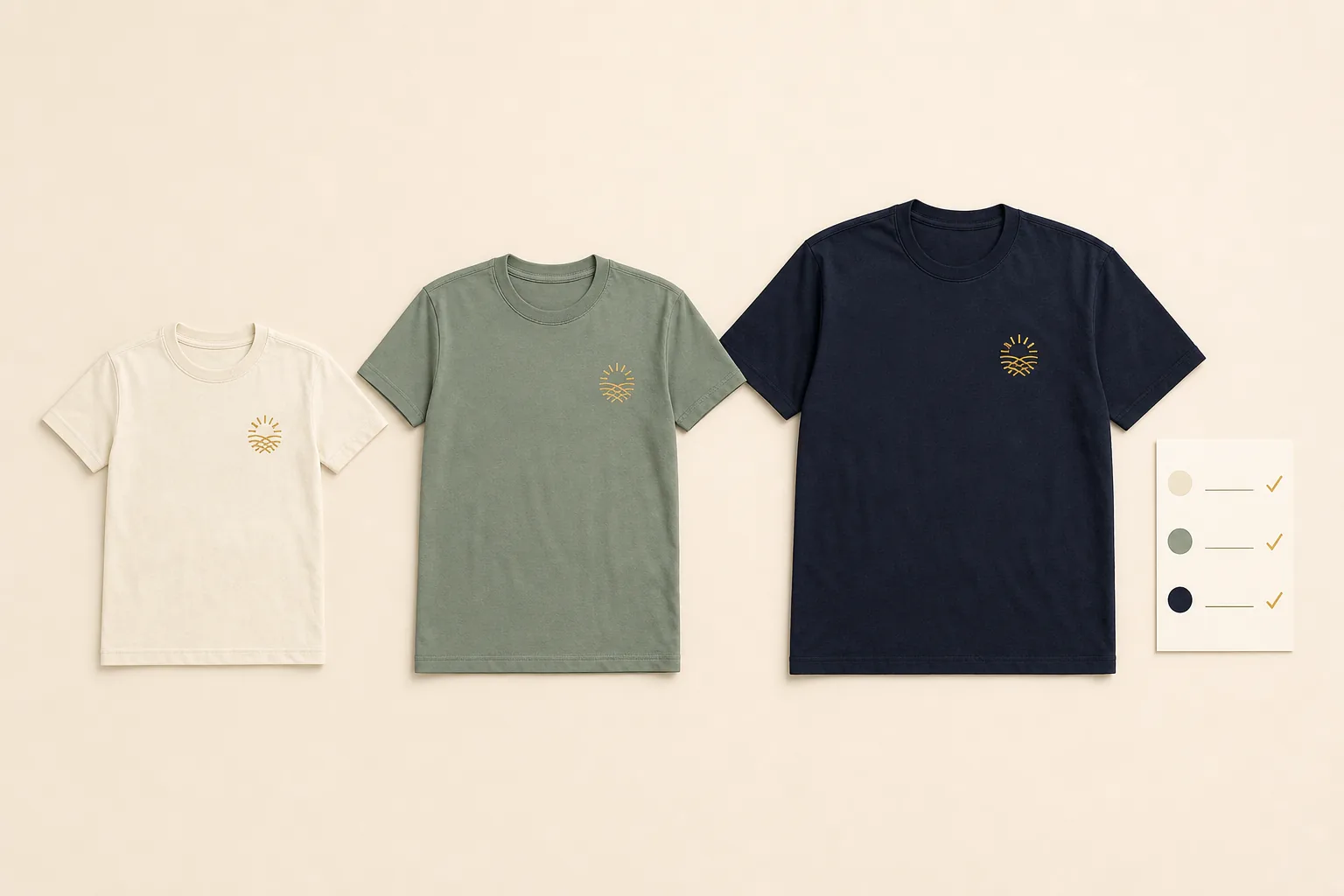
Use strong contrast between the shirt and the role identifier. Navy with cream, charcoal with white, or a restrained brand color with a light mark can stay clear in person and in photos. Use the four-step shirt-and-print color guide to check every produced role color without opening a large group vote.
For most events:
- put the event or organization mark on the front;
- place the role word high on the back where a crowd can see it;
- keep a phone number, schedule, sponsor list, and long mission statement off the uniform; and
- test the layout at realistic print size rather than only viewing it enlarged on a screen.
Bright ordinary shirts can improve visual recognition, but they are not a substitute for certified high-visibility apparel or other protective equipment where a worksite, traffic plan, or local rule requires it.
Plan the front and back as one system
A clean volunteer shirt usually needs only two levels of information.
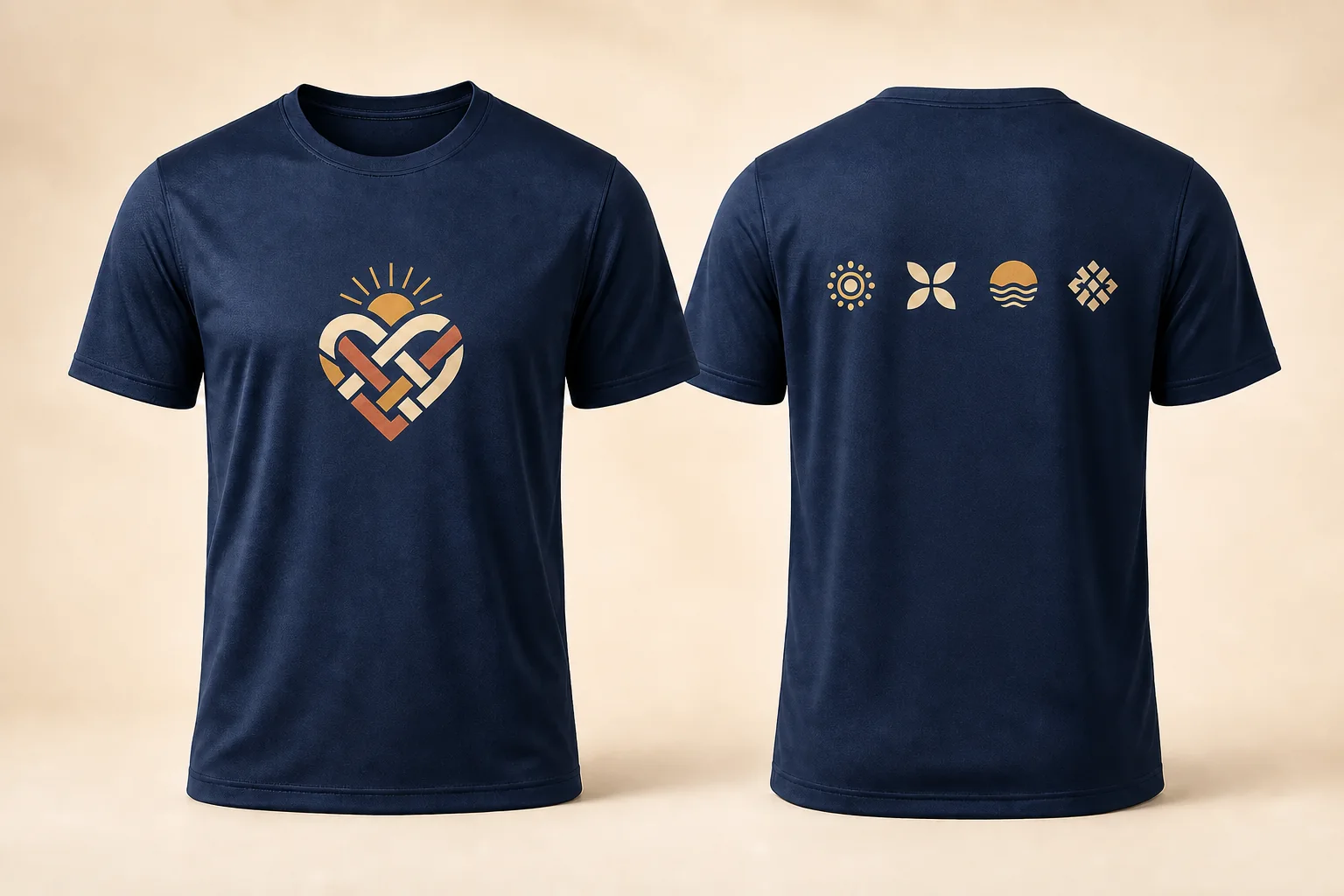
Front: one event or organization mark, optionally with a short event name.
Back: one large role identifier such as VOLUNTEER, STAFF, or TEAM LEAD.
If sponsors must appear, keep them in a controlled lower-back area and separate them from the role word. For many sponsors, use an organized grid and request vector artwork where possible. The volunteer identifier should remain the fastest element to read.
Decide whether the design should be reusable
An annual date creates a stronger event keepsake. An undated design is easier to reuse for recurring programs and late additions.
Choose an event-specific shirt when the year, location, or campaign is part of the shared memory. Choose a reusable volunteer shirt when the same organization runs several service days, check-in desks, or community programs throughout the year.
A useful middle ground is an undated organization mark on the front with a removable name badge or role assignment handled separately.
Collect sizes from people, not percentages
Use a named order list with the person, role, garment, size, and quantity. Separate confirmed volunteers from estimated late additions so the organizer can see what is known and what is buffer. The seven-step group-order checklist keeps that roster connected to design approval, payment, and distribution.
Use the free group size and order form →
Do not apply one blanket extra percentage to every event. A closed employee volunteer day may need almost no buffer. A public event with rotating helpers may need more. Base extras on registration certainty, youth/adult mix, role changes, and whether another event can use leftover shirts.
Estimate a safer quantity and size mix →
Run the timeline backward
Start about 5–6 weeks before the event:
- Confirm roles, garment direction, and event date.
- Collect the logo, role words, and any sponsor files.
- Gather named sizes and flag uncertain volunteers.
- Review one front-and-back mockup at realistic scale.
- Approve the design, written quote, and delivery date.
- Receive, count, sort by role, and stage distribution.
If the date is closer, ask for a complete written schedule before committing. A promised production speed is not the same as a confirmed arrival date.
Build a date-based ordering plan →
Eight-line brief to send a designer
Copy this structure into your design request:
- Organization and event name
- Event date and delivery destination
- Volunteer roles that need to be distinct
- Expected quantity and current size status
- Preferred garment: classic tee, performance shirt, or polo
- Shirt color and logo files
- Front and back wording
- Named person who can approve the final mockup
If the logo is blurry or only available as a screenshot, ask what file is needed before design work begins. See the logo-file guide →
How Togethread helps
Togethread plans coordinated volunteer and fundraiser orders from 50 pieces. Different adult and youth sizes can count toward the same order, and a group can use a controlled garment or role variation when the written quote confirms it. A real designer reviews the brief and confirms the free first-mockup timing in writing. Nothing prints until the organizer approves the design and written order details.
See fundraiser and volunteer shirt options →
For church service teams, see church group apparel. For company service days, see company and event shirts. For school activity crews, see Field Day shirt planning.
FAQ
Should volunteers and staff wear different colors?
Only when the distinction helps guests or the operating team. Otherwise, one shirt color with a clear back role label is simpler and easier to manage.
Where should the word “VOLUNTEER” go?
The upper back is often the most visible place in a moving crowd. A smaller front mark can identify the event or organization.
Can volunteers and participants wear different garments?
Yes. Keep the same core mark and palette while choosing the garment for each role—for example, a performance shirt for active participants and a cotton-blend tee or polo for volunteers.
Should the shirt include the event year?
Include it when the shirt is a keepsake. Leave it off when the organization wants to reuse the same volunteer uniform for future events.
How many extra volunteer shirts should we order?
There is no universal percentage. Start with named registrations, then add a role- and size-specific buffer based on how likely the roster is to change and whether leftovers can be reused.
When should the order start?
About 5–6 weeks before the event is a useful planning runway. Confirm the actual delivery date, production assumptions, and approval deadline in writing.