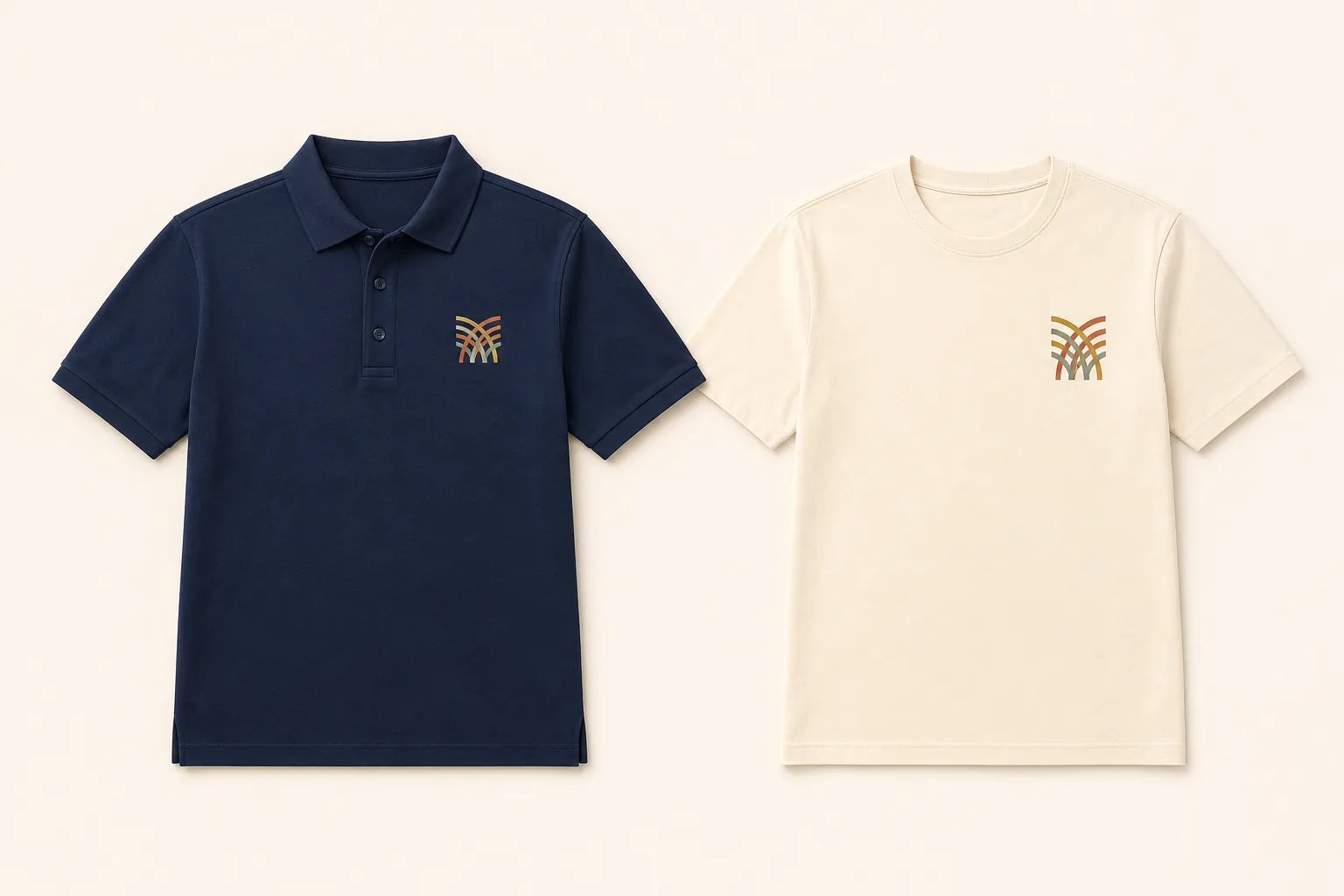
Short answer: There is no universal price for a custom polo. For Togethread’s standard 50+ coordinated route, about $16–28 per piece is a planning range for a basic cotton, blend, or performance polo with one standard decoration location under the written delivery scope. It is not a guaranteed market average or a price cap. Premium blanks, larger or denser embroidery, names, a second logo location, extended sizes, split delivery, and other exceptions can cost more.
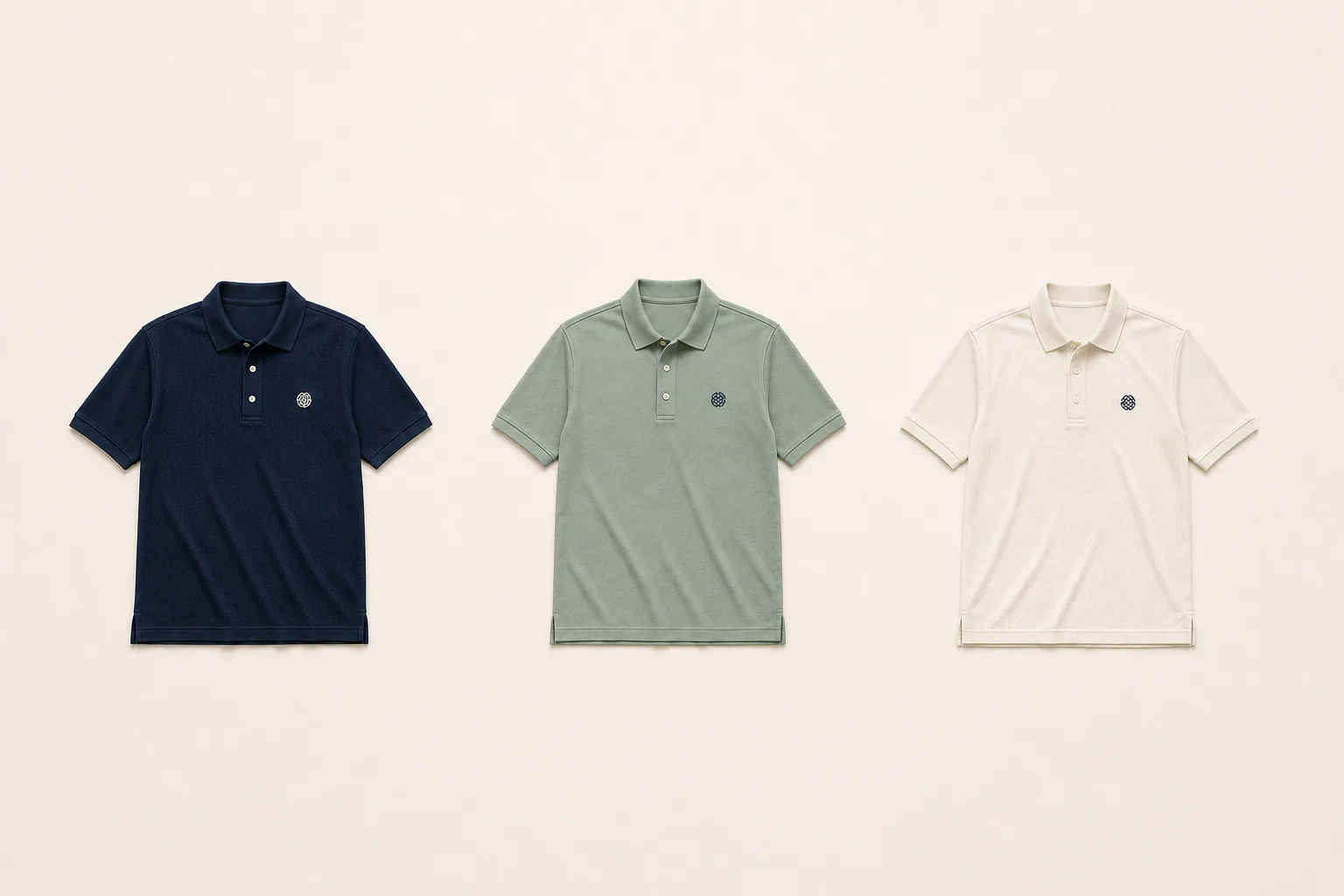
The three complete polos above show why the garment must be chosen before a price is meaningful: textured cotton piqué, a balanced cotton-poly blend, and technical performance fabric are different specifications even when the same small chest mark is used.
Use the complete delivered-cost formula
Compare suppliers with the same formula:
delivered unit cost = (garments + decoration + artwork/setup + personalization + confirmed delivery charges) ÷ ordered quantity
The written total should name the destination and state the freight, duty and tax scope. A low garment-and-logo price is not comparable with a delivered price if shipping, digitizing, names, or a second location appears later.
Use the hidden-cost guide to check setup, extra locations, personalization, packaging, freight, duty, tax scope, and rush assumptions before comparing totals.
Five inputs behind a custom polo quote
- Garment: basic cotton or cotton-poly piqué is a simpler starting point; performance fabric, premium construction, brand-specific blanks, unusual colors, or limited stock can raise the quote.
- Decoration: one compact left-chest mark is simpler than a larger stitch area, dense embroidery, extra placement, printed back artwork, names, or role labels.
- Quantity: more pieces can spread preparation costs only when they keep one confirmed specification; small color or style splits may not share the same efficiency.
- Size plan: a confirmed adult size run is simpler than youth, extended sizes, fit changes, garment changes, or guessed replacements.
- Delivery: one destination and approved schedule is simpler than split addresses, special packing, a shorter eligible timeline, or an expanded import and delivery scope.
Quantity helps only when the compared quote keeps the same garment, artwork size, locations, size range, delivery destination, and schedule. Ordering unused polos simply to reach a lower unit price does not reduce the group’s real spend.
Choose the garment route before comparing price
| Polo route | Best starting use | Check before approval |
|---|---|---|
| Cotton piqué | Indoor staff, hospitality, schools, and classic uniform programs | Fabric weight, shrinkage guidance, collar structure, and care |
| Cotton-poly blend | Everyday teams that need comfort plus easier care | Fiber ratio, surface texture, color consistency, and size availability |
| Performance polo | Outdoor staff, active events, warm conditions, and repeated wear | Named moisture-management specification, snag resistance, opacity, and decoration compatibility |
“Polyester” alone does not prove that a polo manages moisture or resists snags. Ask for the selected garment’s actual fabric specification and size chart.
If polos identify hosts or customer-facing staff inside a larger retreat order, use the company offsite and team retreat checklist to keep the brand owner, attendee roster, alternate garments, sorting plan, and in-hand date connected.
Embroidery, DTF, or screen printing?
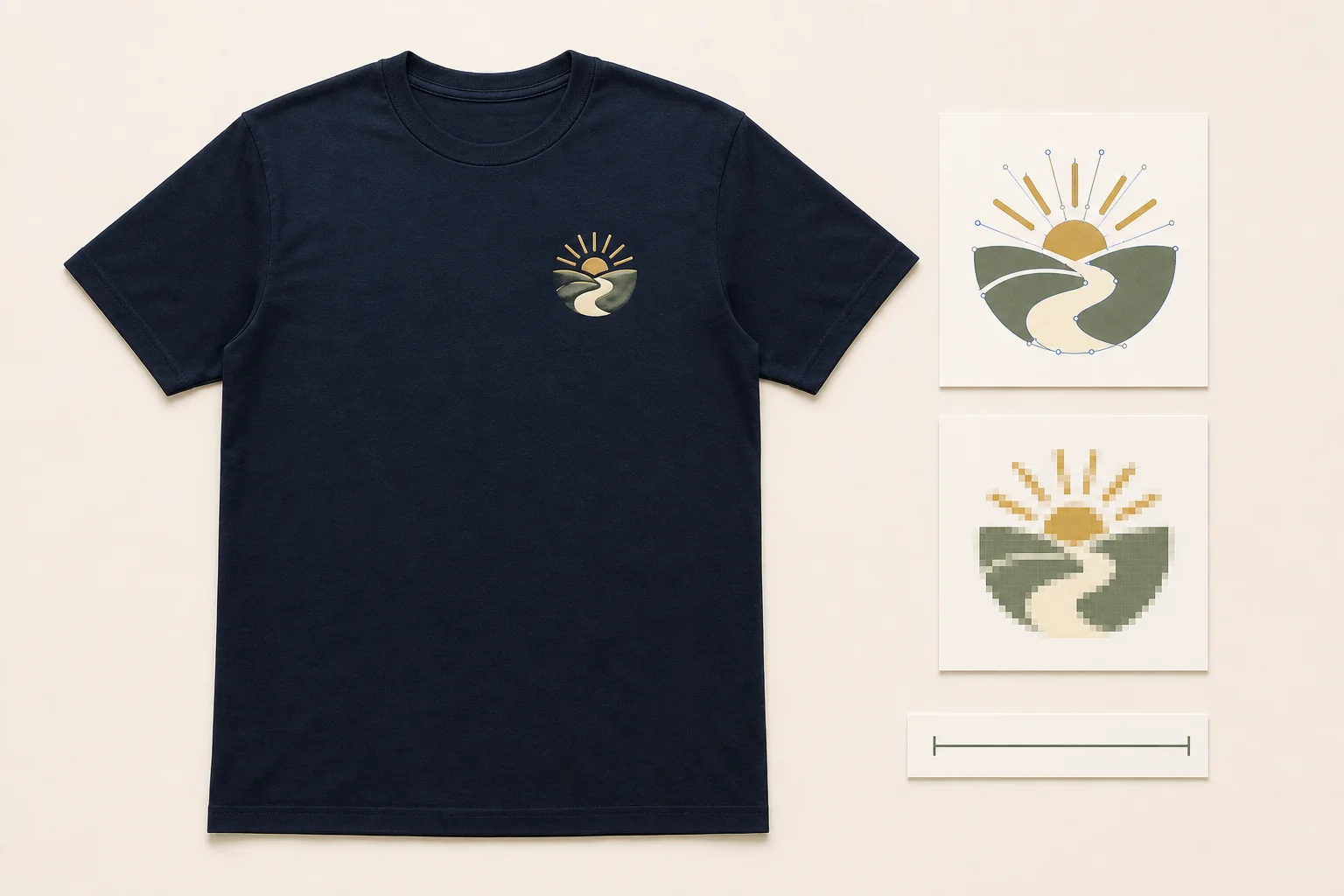
Embroidery is a common choice for a compact polo logo because it creates a structured, raised finish. Its price follows the digitized stitch area, density, placement, and quantity—not simply the number of thread colors. Very fine text, gradients, and oversized coverage may need artwork simplification or another method. Use the logo size and placement guide as a measured mockup starting point, then confirm the actual placket, chest area, smallest size, and stitch field.
DTF can suit a detailed or full-color mark when the selected polo and heat settings are compatible. It avoids preparing a separate physical screen for each artwork color, but print dimensions, coverage, placement, fabric, and quantity still matter.
Screen printing can be efficient for a repeat, simple design at suitable volume, especially on a smoother polo surface. Textured piqué, small quantities, and multiple spot colors can change that decision.
Custom Ink’s current polo guide similarly separates the blank garment, decoration, and setup or digitizing costs, and notes that quantity changes how those costs are distributed. Use that structure when comparing any two suppliers; do not compare a blank-only price with an all-in delivered quote.
If the logo and finish are still undecided, use the two-question embroidery-versus-printing guide before requesting the final same-spec quote.
A same-spec quote checklist
Send every supplier the same six items:
- Garment: exact polo or a written fabric, weight, fit, construction, and color specification.
- Quantity: total pieces plus the real color and size split.
- Artwork: the same file, final physical dimensions, and location for every quote.
- Personalization: names, roles, departments, and second placements listed separately.
- Timing: mockup deadline, approval date, required in-hand date, and any rush assumption.
- Delivery: destination, packing, freight, duty and tax scope, and every exclusion.
Then compare the complete total and specification, not only the per-piece headline.
How Togethread quotes bulk polos
The bulk custom polo route starts at 50 coordinated pieces. Mixed confirmed sizes may count toward that total, while youth, extended sizes, garment changes, multiple colors, extra placements, personalization, destination, freight, duty and tax scope, and schedule are stated in the written quote. A real designer reviews the brief and confirms the free first-mockup timing in writing. Approve the garment, artwork, dimensions, placement, quote, and delivery plan before production; review finished-order photos before the balance.
Start about 5–6 weeks before the event so the group has time to confirm the garment, collect named sizes, review the mockup, and preserve a responsible delivery plan.
FAQ
Is $16–28 the price of every embroidered polo? No. It is a Togethread planning range for a standard coordinated 50+ route with one standard decoration location and a stated delivery scope. The exact blank, logo, size mix, locations, personalization, destination, and schedule determine the written quote.
Does a larger order always make the total cheaper? It can reduce unit cost when the specification stays the same, but the total spend still rises as pieces are added. Order quantities should come from named recipients or a defined use—not from a discount tier alone.
Does embroidery cost more when the logo has more colors? Embroidery is usually driven more by digitized stitch area, density, placement, garment, and quantity than by a simple thread-color count. Metallic or specialty threads and artwork-specific requirements should still be confirmed.
Can one order include cotton, blend, and performance polos? Possibly, but treat each garment as a separate quoted line. Confirm whether the combined quantity qualifies, whether the artwork needs a revised proof, and how each fabric behaves with the selected decoration.