Short answer: Start with embroidery when a compact mark, visible thread texture, and a stable garment are central to the brief. Start with printing when the artwork is larger, contains fine detail or color transitions, or needs a flatter surface. Neither method proves quality, durability, or price by its name alone.
Embroidery converts artwork into stitches. Printing applies a surface layer through a defined system such as DTF or screen printing. The useful comparison is therefore not “thread or ink?” in isolation; it is the same garment, artwork size, placement, quantity, production route, and delivered scope.
Choose a starting point in two questions
This two-question chooser narrows the first mockup direction. It does not replace a garment-compatible artwork review or production specification.
We will show the more suitable first mockup direction.
See my logo on a free mockup →What changes with embroidery
An embroidery file is a production plan, not simply a vector logo sent to a machine. The design must be digitized into stitch types, paths, sequence, density, underlay, pull compensation, and trims. The garment also matters: Wilcom’s embroidery guidance explains that fabric properties affect settings such as density, underlay, and pull compensation.
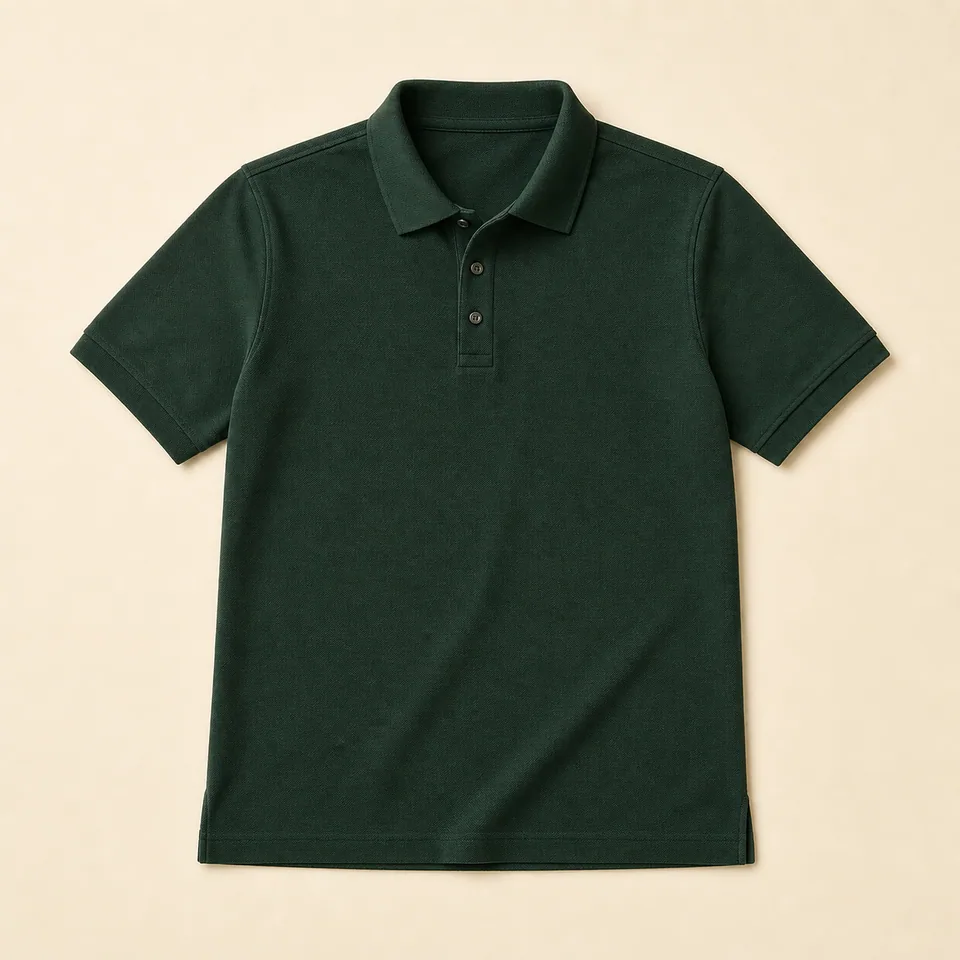
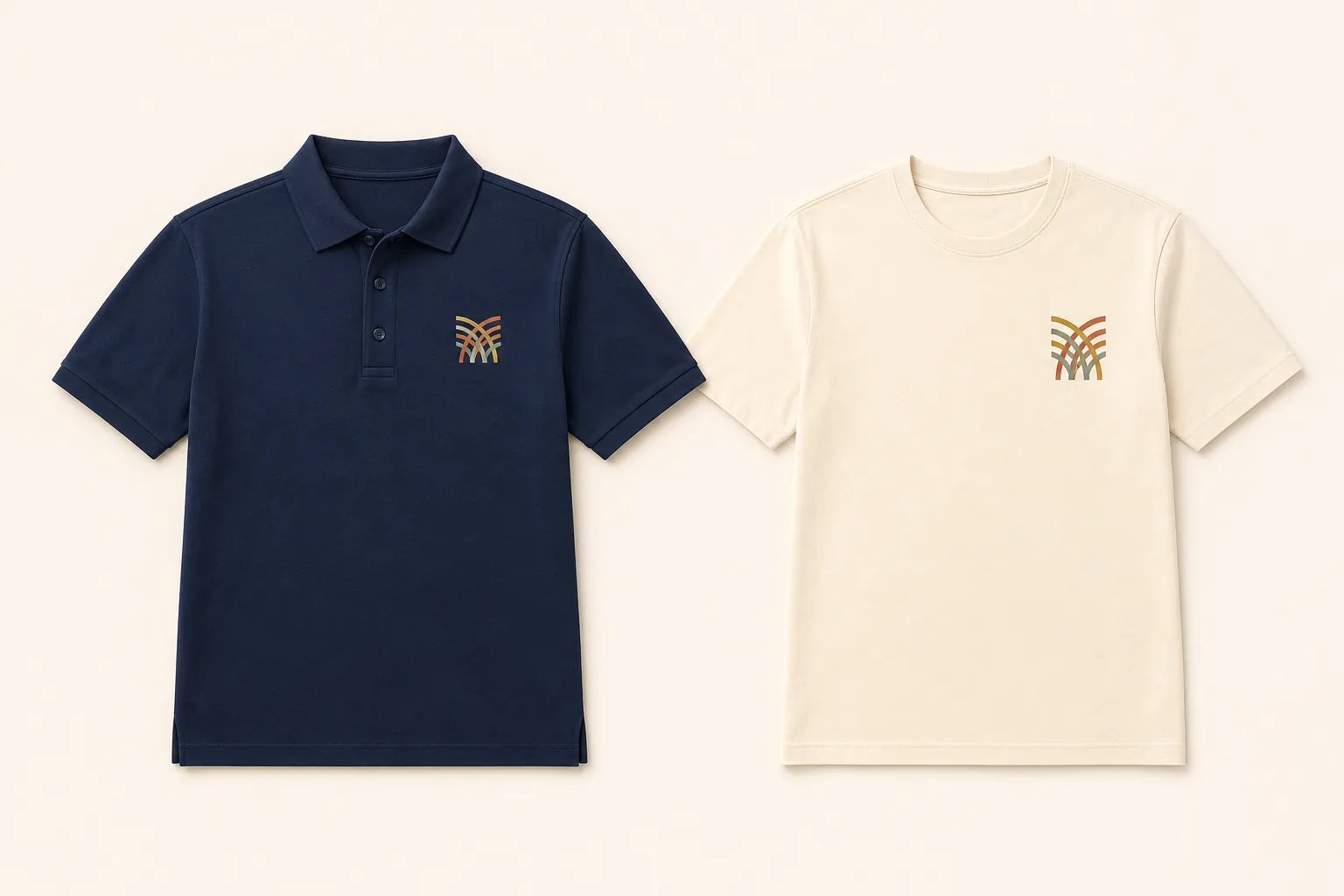
Embroidery is a practical starting point for a restrained left-chest mark on a suitable polo or stable layer. Before approval, confirm:
- the exact garment and fabric construction;
- finished logo width and placement;
- thread colors and any simplification;
- smallest text and narrowest gaps;
- stitch count, density, underlay, and backing;
- whether the garment will be sampled after digitizing.
If the location is not yet defined, start with the logo size and placement guide and treat its ranges as mockup inputs, not universal production specifications.
Scaling is not unlimited. Wilcom’s small-lettering and scaling guidance shows why a design may need different density, underlay, or detail when its size changes. A compact logo that works at one chest width should not be assumed to work at every size.
What changes with printing
“Printing” is not one construction. Two common routes have different quote inputs:
- DTF: artwork is printed onto film, combined with hot-melt powder, heated, and transferred with a heat press. Mimaki’s DTF process overview documents that film-and-powder sequence; the five-stage DTF workflow turns it into a plain-language approval path. It can be a useful route for suitable detailed or multicolor artwork, but compatibility, dimensions, coverage, pressing, dye migration, and hand feel still need review.
- Spot-color screen printing: artwork colors are separated, individual screens are prepared and registered, and the ink system is matched to the garment. ScreenPrinting.com’s separation guidance explains the screens and registration involved; the multi-color cost guide shows why those steps affect a quote. Gradients are not simply “impossible”; a printer may reproduce them through halftone or simulated-process separations when the artwork and production plan support it.
Fine detail also has a floor. STAHLS’ current transfer-art specification warns that very small text or detail may not retain enough adhesive and gives minimum line and resolution guidance for that system. Treat those figures as system-specific evidence, not a universal rule for every printer.
Controlled comparison
| Decision point | Embroidery starting point | Printing starting point |
|---|---|---|
| Construction | Thread sewn through the garment | Ink or transfer applied through a specified print system |
| Useful artwork scope | Compact simplified marks | Larger art, fine detail, photos, or color transitions where supported |
| Garment questions | Stability, stretch, backing, puckering, placement | Fabric chemistry, surface, migration, cure or press compatibility |
| Scale limits | Stitch count, density, stiffness, small lettering | Printable area, coverage, minimum detail, hand feel |
| Quote inputs | Digitizing/setup, size, placement, stitch count, quantity | Process, dimensions, colors or coverage, locations, quantity |
| Proof to request | Sew-out or decorated sample on the intended garment | Decorated sample or relevant application/test basis |
This table identifies questions; it does not rank one method as universally better.
A vector logo is helpful, not a finished embroidery file
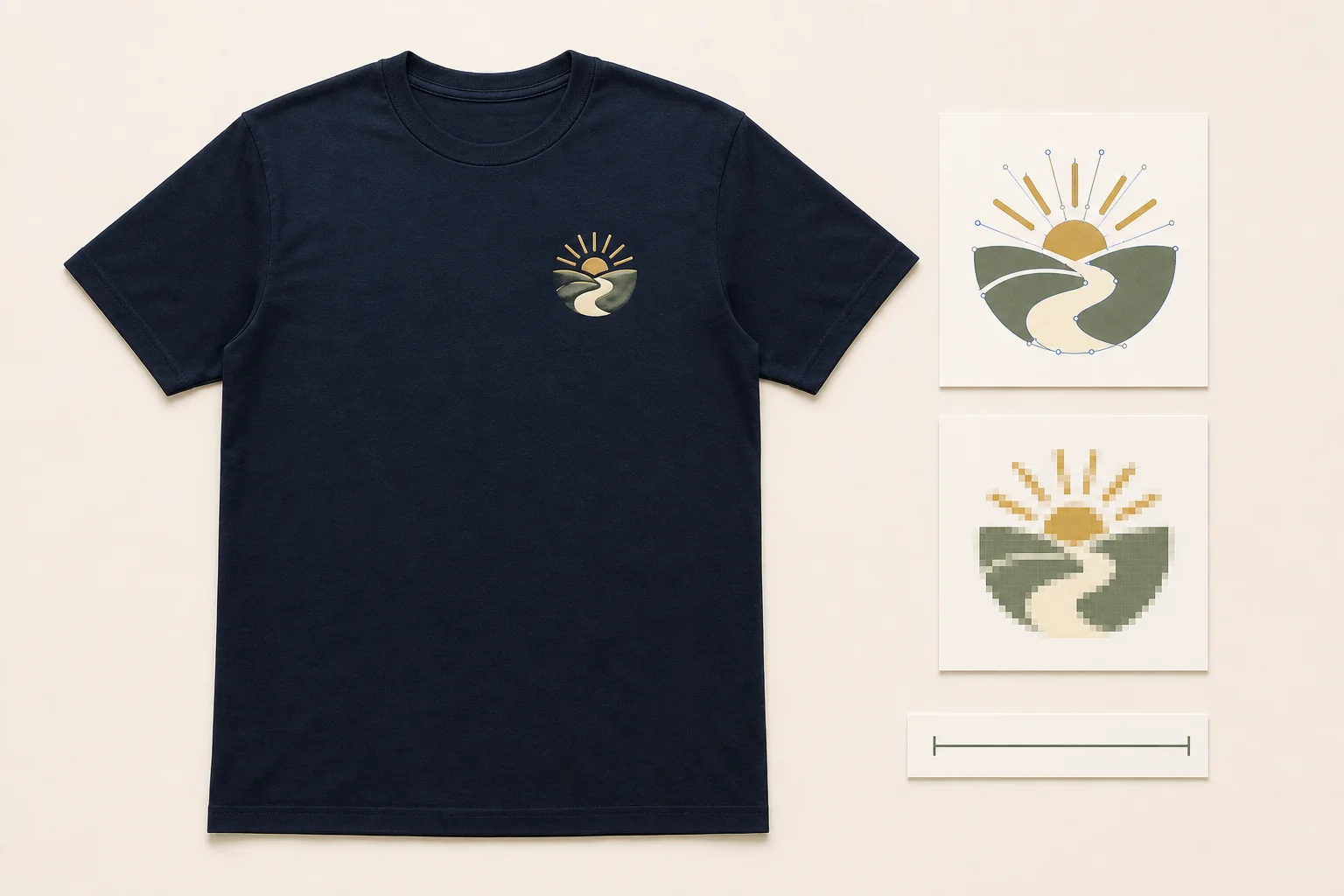
A true vector file keeps paths and edges scalable, which makes artwork cleanup and size changes easier. It still does not decide stitch sequence, density, underlay, backing, pull compensation, or whether tiny features will sew cleanly. Embroidery requires digitizing for the exact application.
For DTF or screen printing, vector art can preserve crisp shapes and clean separations. High-resolution raster art may also be appropriate for photographic or textured printing. Renaming a small JPG as SVG or PDF does not turn it into vector artwork; see the logo file preparation guide before requesting a mockup.
Compare cost on one complete specification
Embroidery pricing can include setup or digitizing, stitch count, quantity, garment, and placement; Wilcom’s pricing documentation illustrates those variables. Screen-print and DTF quotes use different production inputs. A small embroidery mark is therefore not automatically cheaper or more expensive than a large print, and an order’s quantity alone does not settle the answer.
If the intended garment is a polo, the bulk custom polo cost guide separates the blank, decoration, quantity, placements, sizes, and delivery so the same specification can be compared.
Ask each supplier to quote the same:
- exact garment style, color, and size range;
- total quantity and size breakdown;
- artwork file and finished dimensions;
- every front, back, sleeve, or other placement;
- embroidery stitch assumptions or the named print system;
- personalization such as names or numbers;
- mockup, sample, approval, and rework scope;
- destination, required date, freight, duty/tax scope, and exceptions.
Then compare the complete written total, not one setup line against another supplier’s delivered order.
Durability depends on the complete system
Thread does not crack like a surface print, but embroidery can still snag, pucker, abrade, or distort when the garment, density, backing, placement, or care is unsuitable. A print can fail early when ink, adhesive, curing, pressure, substrate, dye migration, use, or care are mismatched.
There is no reliable universal wash-life promise from “embroidery,” “screen print,” or “DTF” alone. For the failure modes and evidence to request, use the print durability guide.
How Togethread handles the decision
Togethread’s coordinated minimum is 50 pieces. For a suitable standard DTF route, we do not prepare or charge a separate physical screen for every artwork color. That does not make every full-color design the same price: the garment, artwork dimensions, coverage, locations, quantity, personalization, destination, freight, duty/tax scope, delivery plan, and exceptions are confirmed in writing.
For embroidery, the mockup begins with the intended garment, finished logo width, location, and artwork. Stitch assumptions and sampling needs are reviewed before production. A real designer reviews the brief and confirms the free first-mockup timing in writing; you approve the artwork and written quote before production and review finished-order photos before the balance.
FAQ
Is embroidery better than printing for a company logo?
Not by default. Embroidery is a useful starting point for a compact mark on a compatible polo or stable layer. Printing may fit a larger, more detailed, or gradient-based logo. Compare both on the same garment and dimensions. For a retreat or offsite, use the company offsite shirt checklist to keep the brand owner, attendee garments, logo versions, named sizes, sorting plan, and required date in one approval path.
Can embroidery reproduce gradients or photographs?
Thread can approximate tonal areas through stitch choices and color changes, but it does not reproduce a photograph like a suitable print system. A simplified embroidery version may be needed.
Can a T-shirt be embroidered?
Yes, when the garment, placement, backing, density, and mark size are compatible. Thin or stretchy jersey and large dense stitch fields need particular care because added structure can cause stiffness or puckering.
Which costs less: embroidery, screen printing, or DTF?
There is no method-only answer. Compare the exact garment, dimensions, placements, quantity, stitch count or print coverage, personalization, sampling, and delivered scope.
Which decoration lasts longer?
The method name alone cannot establish wash life. Ask for evidence tied to the exact garment, decoration system, application, use, and care procedure.