Short answer: Extra colors do not raise every custom-shirt quote in the same way. In spot-color screen printing, each artwork color normally needs its own prepared screen, registration, and print pass; a dark garment may also need a white underbase. DTF and other digital routes do not prepare a separate physical screen for every artwork color, but the garment, artwork dimensions, coverage, locations, quantity, personalization, and delivery scope still affect price.
Start with the decoration method, not the color count
“Five colors” is incomplete quote information. First identify how the design will be produced.
| Decoration route | How color enters production | What the quote should identify |
|---|---|---|
| Spot-color screen print | A separate prepared screen normally carries each spot color | Spot colors, underbase, screens, locations, registration, quantity |
| DTF transfer | The full artwork and white layer are printed onto film, powdered, cured, then pressed | Transfer dimensions, coverage, garment compatibility, locations, quantity |
| DTG | Artwork is printed directly onto a prepared garment | Garment composition/color, pretreatment, white ink, dimensions, locations |
| Sublimation | Dye transfers into compatible polyester | Fabric composition, base color, printable area, coverage, construction |
| Embroidery | Thread is stitched through the garment | Stitch count/density, dimensions, placement, backing, garment structure |
The same visual artwork can therefore have a different cost structure under a different production route. “More colors cost more” is mainly a spot-color screen-print rule, not a universal custom-apparel rule.
If the real decision is a compact stitched logo versus a printed logo, use the embroidery vs screen-printing chooser before reducing colors or requesting setup prices.
Why added spot colors create more screen-print work
Screen printing applies ink through prepared stencils. Current ScreenPrinting.com production guidance says that each color in a multi-color design requires a separate screen, followed by registration and test printing so the layers align.
For a typical spot-color job, another color can add some combination of:
- artwork separation into another color layer;
- another coated, exposed, washed, and prepared screen;
- another ink and press position;
- registration work to align that screen with the others;
- another print pass and, when needed, a flash step;
- cleanup and reclaim work after the run.
That does not mean three colors must cost exactly three times one color. A printer may include setup in an all-in unit price, charge it separately, or use another production method. Custom Ink’s current pricing explanation, for example, says its quote considers the product, number of ink colors, and total quantity while including setup in its displayed price.
Use the screen-print setup-fee guide to compare an itemized screen charge with a bundled price without treating either format as automatically cheaper.
One design, three different production scopes
| Artwork direction | Likely screen-print scope | A digital-transfer scope |
|---|---|---|
| One spot color | Usually the simplest separation and registration path | Still priced under the supplier’s transfer and application system |
| Three spot colors | Normally three artwork separations and registered screens, plus any needed underbase | No separate physical screen for every visible artwork color |
| Detailed full color | May require process or simulated-process separations and specialist proofing | Often a natural digital starting point, subject to file, coverage, and garment checks |
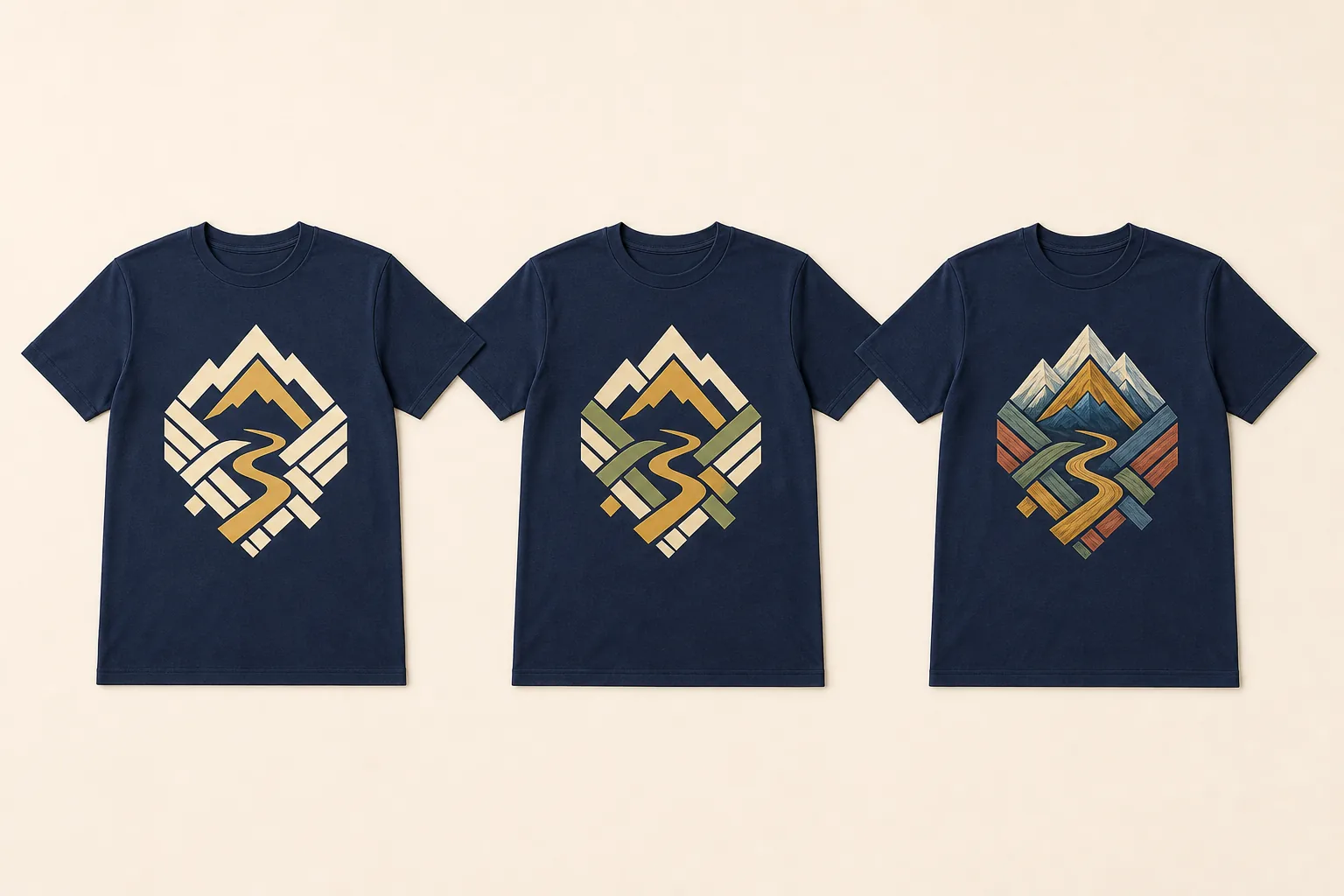
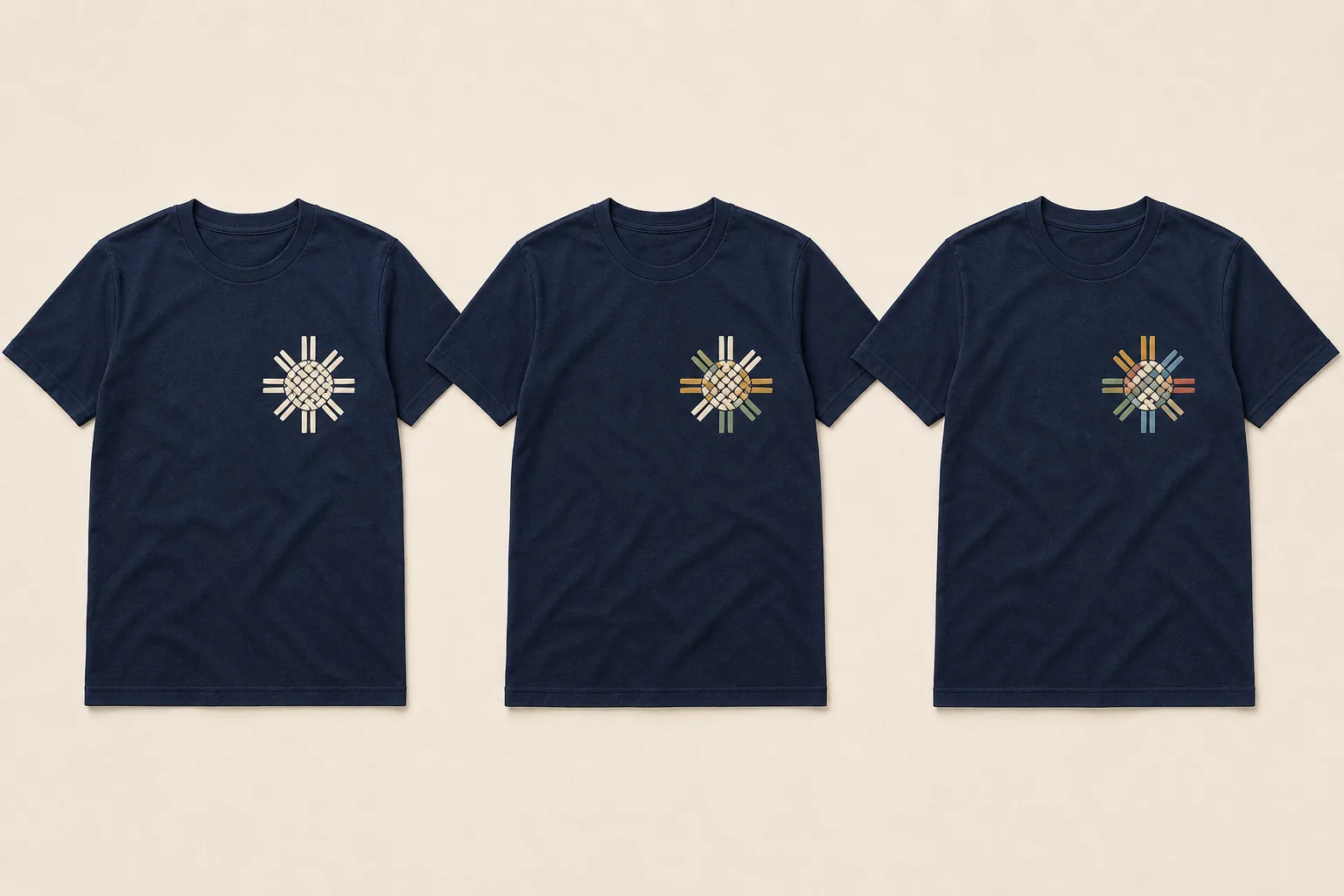
The new comparison image above holds the garment and emblem constant so only the artwork palette changes. It is a planning illustration, not a promise that one method is always cheaper.
Four details that can matter more than the visible palette
1. A dark garment may add an underbase
Bright spot colors on navy or black may need a white layer underneath. That underbase can add another screen and print step even though the customer sees it only as support for the visible artwork. ScreenPrinting.com’s underbase guidance gives the practical example that a two-color design on navy can become a three-screen job.
2. Front and back are separate locations
A one-color front plus one-color back is not the same production scope as one front location. Ask for the dimensions and method at every chest, back, sleeve, or leg position.
3. Large coverage is not the same as a small chest mark
Two files may contain the same number of colors but use very different ink, film, adhesive, press time, or stitch coverage. For one current market example—not an industry-wide rule—STAHLS publishes full-color transfer pricing by artwork dimensions and quantity.
4. Different shirt colors may need different artwork versions
A light logo that works on navy may disappear on cream, while a dark version may fail on black. Record every garment color and approve the correct light, dark, or full-color version instead of assuming one file works everywhere.
When simplifying the palette can save money
Simplifying is most useful when all of these are true:
- the supplier is quoting spot-color screen printing;
- the artwork remains recognizable with fewer colors;
- the same separated design repeats across a suitable quantity;
- the garment colors do not require additional artwork versions or underbases;
- the group prefers a bold, flat graphic over gradients or photographic detail.
Do not remove useful brand or role information only to chase the fewest colors. A simpler screen-print file can be efficient, but an over-simplified mark that nobody wants to wear is not a better order.
When a full-color route deserves comparison
Compare DTF, DTG, or sublimation when the artwork uses gradients, many small color transitions, photographs, or detailed illustrations. The correct route still depends on the exact garment and use:
- DTF: suitable detailed artwork across compatible cotton, polyester, and blends; confirm film, powder, pressing, migration, coverage, and hand feel.
- DTG: often strongest on compatible cotton-rich garments; confirm pretreatment, white ink, and garment color.
- Sublimation: strongest for compatible light high-polyester products and integrated coverage; it is not a general dark-cotton substitute.
Use the DTF process guide and screen vs DTF vs vinyl chooser to compare construction before comparing price.
If wear and laundering matter to the decision, use the print durability guide to compare failure modes and the evidence to request for the exact garment and decoration system.
An eight-line brief for a fair quote
Send every supplier the same specification:
- exact garment style or blank reference and garment color;
- total quantity and size list, including youth or extended sizes;
- artwork file and the number of approved color versions;
- finished print dimensions for every location;
- front, back, sleeve, or other placement list;
- proposed method, visible spot colors, and any white underbase;
- names, numbers, or other per-piece personalization;
- named destination, required date, freight, duty/tax scope, and exceptions.
Then compare the complete written total and production scope, not one supplier’s screen fee against another supplier’s finished delivered price.
How Togethread quotes multi-color artwork
Togethread’s coordinated minimum is 50 pieces. For a suitable standard DTF route, we do not prepare or charge a separate physical screen for every artwork color. That is not the same as saying every full-color design costs the same: garment, quantity, artwork dimensions, coverage, locations, size range, personalization, destination, freight, duty/tax scope, delivery plan, and exceptions are confirmed in writing.
A real designer reviews the brief and confirms the free first-mockup timing in writing. You approve the artwork and written quote before production and review finished-order photos before the balance.
FAQ
Do more shirt-design colors always cost more? No. Added spot colors commonly add screens and registration in screen printing. Digital methods do not prepare a separate physical screen for each artwork color, but other variables still change the quote.
Why can the same two-color logo cost more on a dark shirt? A screen printer may need a white underbase to keep the visible colors bright. Confirm whether that support layer adds a screen, pass, or charge in the quoted system.
Does full-color DTF cost the same for every design? No. DTF removes separate spot-color screens, not all production variables. Dimensions, coverage, white ink, garment compatibility, quantity, locations, pressing, personalization, and delivery can still differ.
Is screen printing always cheaper for a large order? Not always. It can be competitive for repeated, simple spot-color art at suitable volume. Compare the same garment, dimensions, locations, quantity, personalization, and delivered scope against the digital alternative.
Should I simplify my logo before requesting a quote? Send the original file first. Ask for both the intended full-color route and a simplified spot-color alternative only if both versions preserve the mark’s meaning and readability.