Short answer: DTF (direct to film) creates a transfer by printing artwork and a white layer onto film, applying hot-melt adhesive powder, curing the transfer, and heat-pressing it onto a compatible garment. It can reproduce many colors and fine detail without preparing a separate physical screen for every artwork color.
DTF is not one universal film, ink, powder, press setting, or durability result. The complete system, artwork, fabric, application, and care must work together.
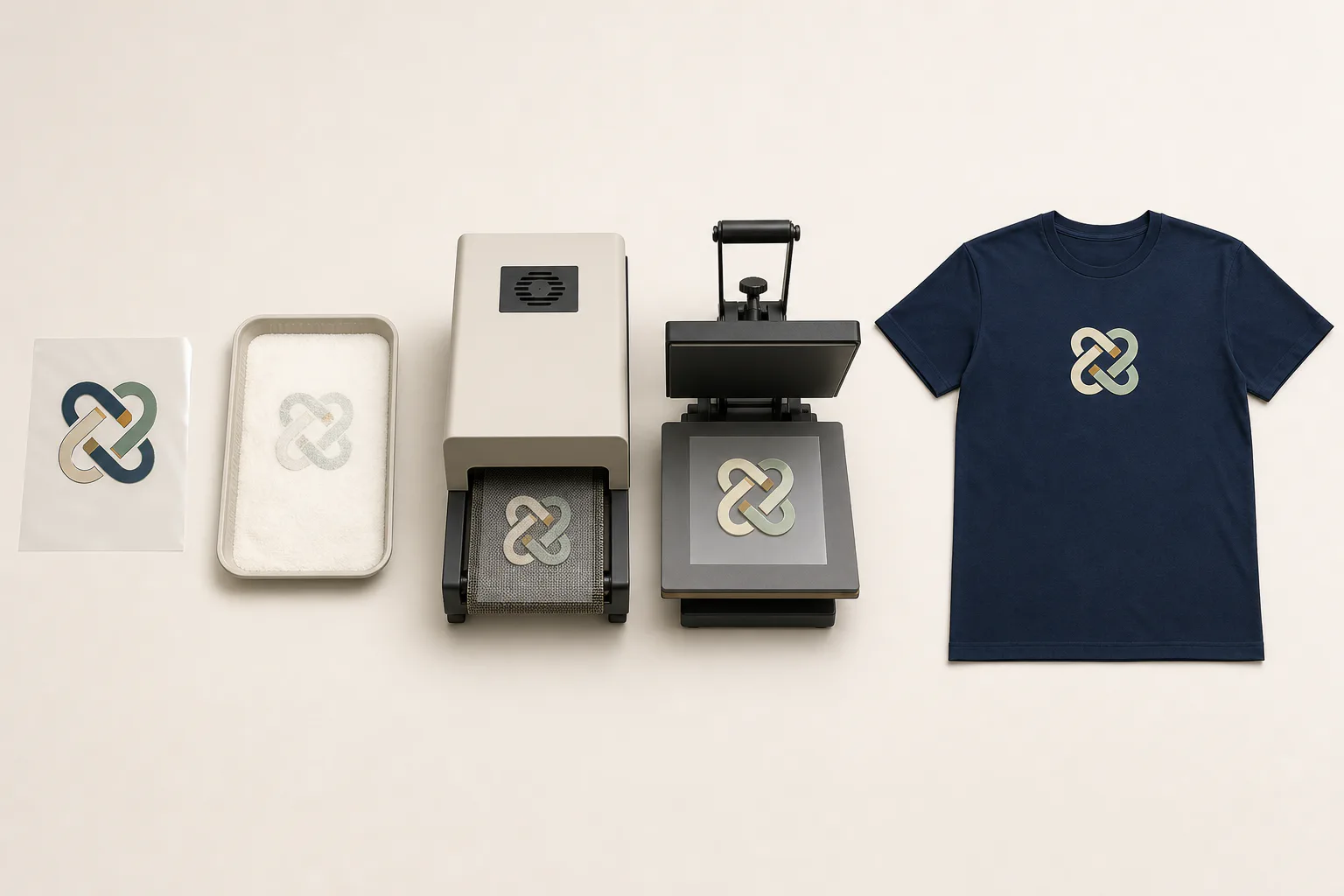
The five-stage DTF workflow
Mimaki’s current DTF workflow describes the same core route shown above: print on film, apply hot-melt powder, heat and dry the transfer layer, then heat-press it to fabric. Equipment and instructions vary by system, so the supplier’s exact specification controls production.
- Prepare the artwork. Set the design at actual print size and check transparency, edge quality, minimum detail, color handling, and the required white layer.
- Print onto film. A DTF printer builds the color and white ink system on a compatible transfer film according to its production workflow.
- Add adhesive powder. Hot-melt powder coats the wet ink layer. Excess powder is removed so unwanted grains do not become part of the finished edge.
- Cure the transfer. Heat activates or gels the adhesive into a transferable layer. The required temperature and dwell depend on the selected system.
- Press, peel, and finish. The cured transfer is aligned, pressed, peeled as instructed, and finished on the approved garment before quality review.
The important distinction: DTF builds the decoration on film before transfer. DTG prints ink directly onto a garment; HTV cuts shapes from colored film; sublimation dyes compatible polyester; screen printing pushes ink through prepared screens.
What actually determines the result
The artwork
DTF can reproduce fine detail, but “full color” does not make every file production-ready. Very thin lines, soft transparent edges, low-resolution artwork, accidental background rectangles, and huge solid coverage can create adhesion, edge, hand-feel, or clarity problems.
STAHLS’ current UltraColor MAX artwork specification, for example, publishes actual-size resolution and minimum-detail requirements for that transfer product. Those numbers are product-specific, not universal DTF rules, but they demonstrate why the exact system must be named.
Film, ink, white layer, and powder
DTF is a coordinated material system. Roland’s current commercial DTF description identifies printer, inks, film, powder, software, and optional shaker/dryer as parts of one workflow. Swapping one component or using incomplete curing instructions can change opacity, powder adhesion, edge quality, color, and durability.
The garment
Some DTF systems publish compatibility with cotton, polyester, blends, nylon, or other textiles, but a fabric name alone is not approval. Knit, weave, dye, surface treatment, stretch, heat sensitivity, moisture, and finish still matter. Dark polyester can also require controls for dye migration.
STAHLS’ application-instruction library recommends testing because fabrics, weaves, coatings, and dyes vary. Ask which decorated garment and color were actually tested.
Use the fabric comparison guide to separate cotton, polyester, and blend choices from the decoration method itself.
Pressing and finishing
Time, temperature, pressure, platen condition, peel timing, cover sheet, finishing press, and cooling instructions are product-specific. Do not copy a setting from an unrelated DTF transfer. The shop should use the current instructions for the selected film/ink/powder system and garment.
DTF strengths and trade-offs
Consider DTF when you need
- Detailed or multicolor artwork without a separate screen for every artwork color
- Bright marks on suitable light or dark garments
- A shared design across compatible cotton, polyester, and blended styles
- Repeatable transfer shapes for coordinated group production
Compare another route when you need
- A large repeat run with simple spot-color artwork that suits screen printing
- True edge-to-edge graphics on compatible light polyester
- A compact premium mark that suits embroidery
- A very large solid print where breathability and surface feel are priorities
No method wins from color count alone. Use the DTF vs screen printing vs vinyl chooser when the artwork, quantity, or garment is still open.
What does a DTF print feel like?
A DTF decoration is a layer on top of the fabric. The feel changes with transfer thickness, surface finish, print dimensions, coverage, negative space, garment stretch, and finishing. A compact open mark can feel much lighter than a large solid rectangle even when both use the same production system.
Ask for the final dimensions and a relevant close-up or decorated sample. A screen preview cannot prove surface feel.
DTF compared with other methods
| Method | Where the decoration is built | Strong starting point | Main boundary |
|---|---|---|---|
| DTF | Printed and powdered on film, then transferred | Detailed or multicolor marks on compatible garments | Surface layer, system-specific application and feel |
| DTG | Printed directly onto a pretreated garment | Cotton-rich items and direct print workflows | Pretreatment, fabric, ink, curing, and color handling |
| Screen print | Ink pushed through prepared screens | Repeated simple spot-color artwork at suitable volume | Screens, registration, ink, cure, and locations |
| HTV | Shapes cut from colored film | Simple names, numbers, and bold shapes | Weeding, layers, film compatibility, pressing |
| Sublimation | Dye transferred into compatible polyester | Light polyester and integrated all-over color | Substrate and garment color |
| Embroidery | Thread stitched through the garment | Compact marks on stable polos and layers | Stitch density, backing, detail, puckering |
What affects DTF price?
DTF avoids a separate physical screen for every artwork color, but it does not make every decoration the same price.
The multi-color screen-print cost guide separates color-driven screen work from dimensions, coverage, locations, garment compatibility, and delivery so a full-color DTF route is not mistaken for one universal price.
- Print dimensions and coverage: a large back graphic consumes more material and press capacity than a small chest mark.
- Locations: front, back, and sleeves are separate production steps.
- Garment and quantity: blank apparel, size range, and sorting may dominate the delivered total.
- Personalization: changing names or numbers adds files, transfers, roster checking, sorting, and rework risk.
- Artwork preparation: unsuitable files may need rebuilding before they meet the selected transfer system’s specification.
- Delivery scope: freight, duties, taxes, address count, deadline, and exceptions remain part of the comparison.
Compare the complete delivered quote, not a transfer price in isolation. The setup-fee guide explains why “no separate color screens” is not the same claim as “no preparation work.”
How long does DTF last?
There is no honest universal wash count from the letters “DTF.” Film, ink, powder, curing, pressing, garment, artwork coverage, wear, washing, and drying all affect the result. Early edge lift, cracking, dye migration, or fading should be diagnosed against the exact system and garment.
Use the print durability guide to compare failure signs and care questions. Follow the garment label and the decorator’s written instructions for the finished product; ask the supplier to resolve any conflict before production.
Eight questions to ask a DTF supplier
- What exact garment style, color, and fabric will be decorated?
- What DTF transfer system is being used?
- What are the approved print dimensions and locations?
- Does the artwork meet that system’s resolution and minimum-detail requirements?
- Was the selected garment tested for heat sensitivity, adhesion, stretch, or dye migration?
- What visible result counts as a production defect or rework?
- What care instructions apply to the finished decorated garment?
- Does the quote include artwork preparation, personalization, delivery, duty/tax scope, and exceptions?
How Togethread uses DTF
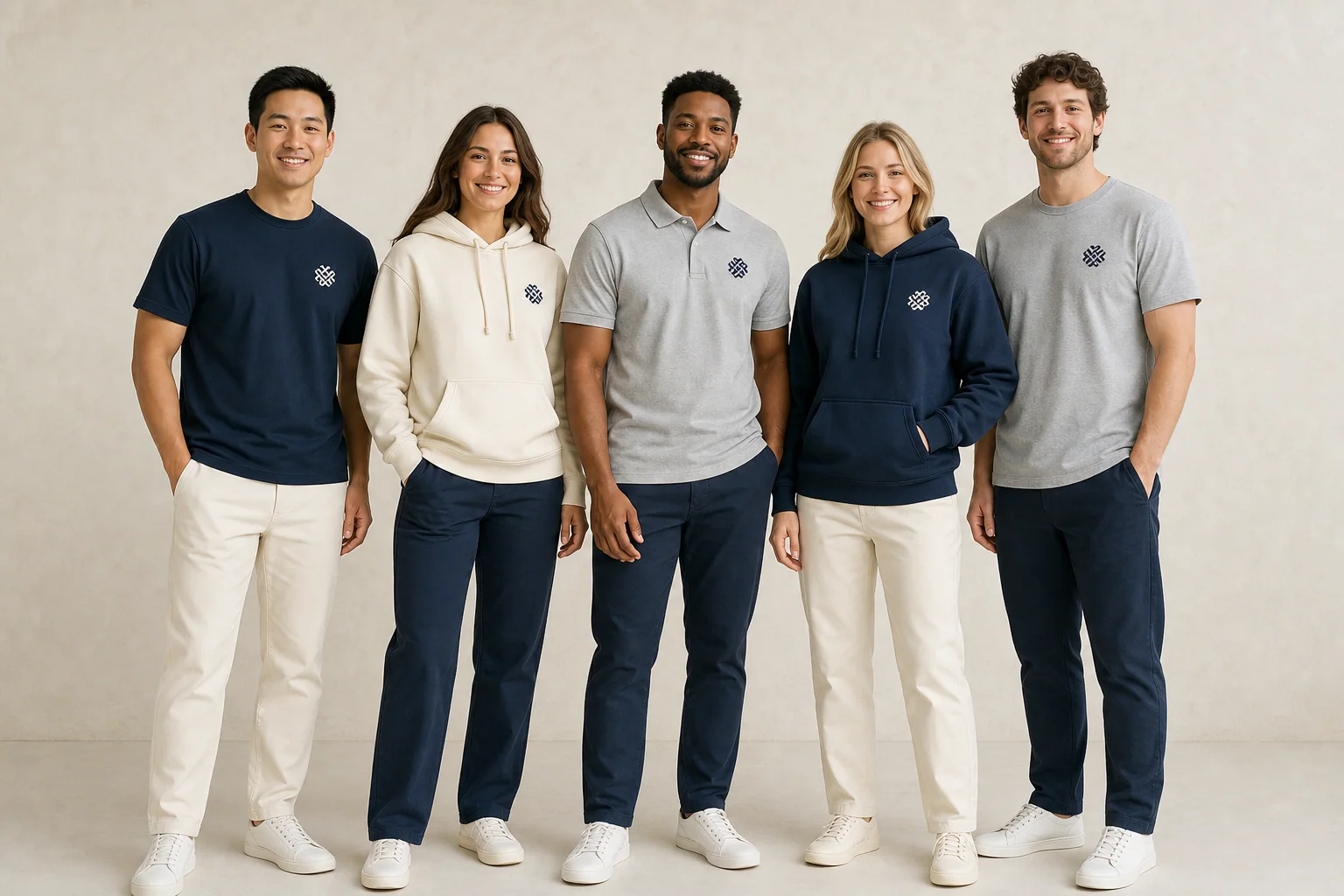
Togethread uses DTF for suitable detailed and full-color group designs without preparing a separate screen for every artwork color. The written quote still confirms the garment, dimensions, locations, coverage, quantity, size range, personalization, destination, freight, duty/tax scope, delivery plan, and exceptions.
Before production, you approve the current mockup, garment, quote, and schedule. Finished-order photos support final review, but they do not replace the agreed garment specification, decorated sample where required, or written rework standard. Togethread’s coordinated minimum is 50 pieces.
For repeat production, keep the named garment, transfer system, print dimensions, placement, and approved artwork together; the reorder guide shows what must be reconfirmed before another run.
FAQ
Can DTF print on dark shirts?
Many DTF systems use a white layer so colors remain visible on suitable dark garments. The selected film, ink, powder, garment dye, pressing, and testing still determine the result.
Can DTF print on polyester?
Many systems list compatible polyester, but heat sensitivity, fabric treatment, stretch, and dye migration vary. Confirm the exact garment and color rather than approving “polyester” as a complete specification.
Is DTF cheaper than screen printing?
It can be efficient for detailed or multicolor artwork because it avoids separate physical screens for every artwork color. Screen printing may be competitive for repeated simple spot-color work. Compare the same garment, dimensions, locations, quantity, personalization, and delivery scope.
Does DTF crack or peel?
It can fail early when the material system, curing, pressing, garment, coverage, or care are mismatched. A compatible and correctly applied transfer can perform well, but the method name alone is not a durability guarantee.
Is DTF the same as vinyl?
No. HTV cuts and weeds shapes from colored film. DTF prints a multicolor ink and adhesive system on a carrier film before transfer.
What is Togethread’s minimum for DTF orders?
Togethread’s coordinated order minimum is 50 pieces. A local or no-minimum provider is normally a better route for one or a few replacements.