Short answer: Start company offsite or team-retreat shirts about 6 weeks before the event. Build one named attendee-and-size list, confirm the garment and logo brief, get the right brand owner to approve the mockup, and put the in-hand date and delivery scope in writing before production.
The useful goal is not simply matching shirts. It is one wearable item that reaches the correct attendees, fits the event schedule, follows the company’s brand rules, and can be sorted without creating another last-minute task for the organizer. Current guidance from Custom Ink’s team-building apparel overview and Merchpath’s offsite merch guide also centers the offsite around intentional, useful apparel rather than a crowded bag of generic items.
1. Lock in your headcount and sizes first
Before final artwork approval, collect one named response for every attendee. Letter sizes are not universal across garments, so keep the selected product and its size chart attached to the list:
- Set a response cutoff before the mockup approval date
- Record the exact garment, color, size, quantity, team or office, and pickup or shipping note
- Keep non-responses visible instead of assigning a guessed size
- Separate confirmed sizes from any role- and size-specific buffer for likely late additions
- Decide whether one shared fit or a small set of approved fit options is easier to distribute
Sizes can mix toward Togethread’s coordinated 50-piece minimum. Ask the written quote to separate standard adult, youth, extended sizes, different garments, extra decoration locations, and personalization so the budget has no hidden assumptions.
2. Prepare one brand-approved brief
Keep five items in one review document:
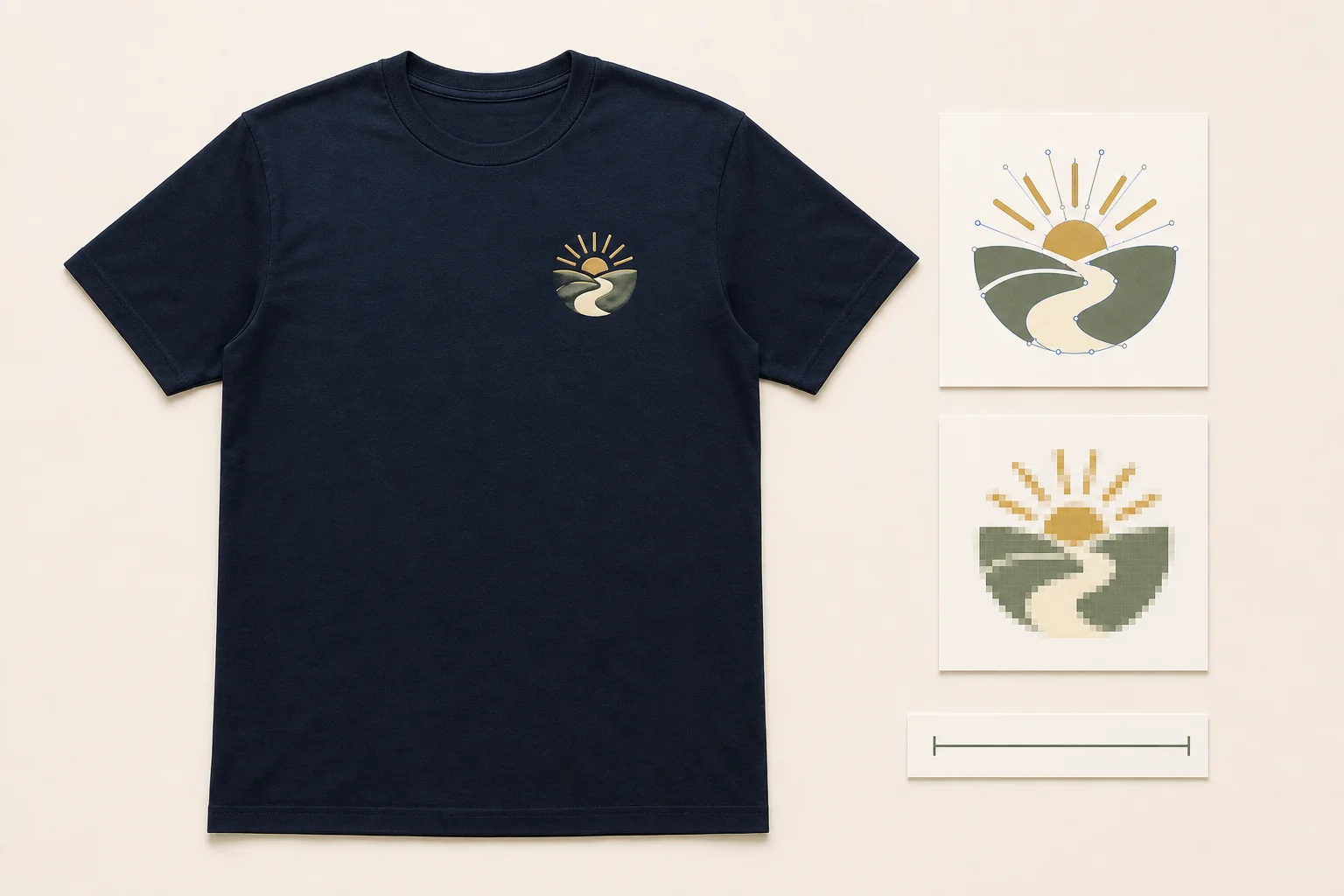
- Company logo: the best original vector file available, or the largest clean raster source—not an upscaled screenshot.
- Approved colors: the digital reference and any required spot-color reference.
- Measured placement: left chest, front, back, or sleeve on the actual garment.
- Event wording: only the offsite name, date, or location that the team intends to keep.
- Decoration scope: method, dimensions, locations, coverage, and any approved name or team variation.
If you do not have a finalized design, a real designer reviews the logo brief and confirms the first-mockup timing in writing. Additional directions follow from your feedback.
Use the T-shirt logo size and placement guide to turn “left chest” or “back” into a measurable starting brief, then review it on the smallest and largest garments in the actual order.
3. Choose the garment from the schedule
| Event use | Practical starting point |
|---|---|
| Outdoor activities or warm-weather team games | Compare the exact performance-shirt fabric, fit, opacity, care, and decoration method |
| Indoor sessions, travel day, or casual dinner | Compare a classic or heavyweight tee by the actual fabric weight, fit, hand feel, and size chart—not the word “premium” |
| Cool meeting rooms or evening gathering | Use a pullover hoodie or crewneck only when attendees can comfortably layer it |
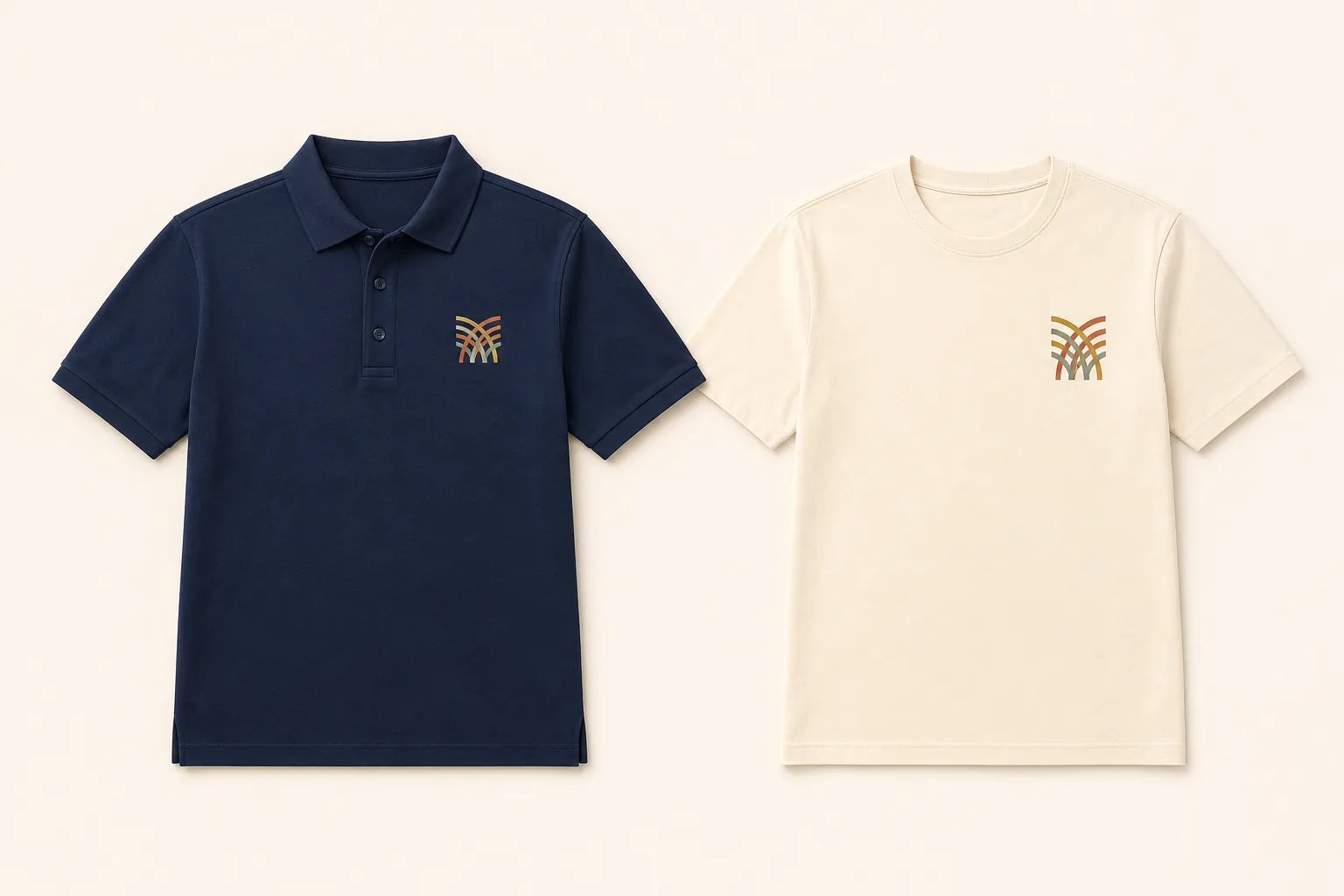
| Hosts, facilitators, or customer-facing staff | A polo can separate working roles while keeping the same logo system |
Match the garment to the longest part of the schedule, then confirm the logo works at the chosen placement and scale. If the cool-weather choice is still open, compare the hoodie and crewneck by use, layering, print area, and exact specification before choosing one. If hosts need polos while attendees receive tees or hoodies, use the mixed sizes, colors, and styles guide to keep every garment, colorway, size chart, artwork version, and quantity in one written order plan.
4. Run the timeline backward from your event date
Work backward from the day the organizer needs the cartons—not just the opening session:
- Event date — your hard deadline
- Sort and handoff window — normally keep several days for counting, office or team labels, and attendee pickup
- Written approval-to-door range — Togethread normally plans 15–20 business days after the mockup, garment, quantity, size list, address, deposit, and delivery plan are approved
- Brand and organizer approval — leave time for the correct owner to review the exact garment, logo scale, colors, names, and date
- Attendee response cutoff — resolve missing or changed sizes before production approval
Planning runway: About 6 weeks before the event is a practical starting point, not a guarantee. If the event is inside five weeks, compare a local or domestic option unless the complete schedule and in-hand date are confirmed in writing before the team commits.
Once the mockup is approved, use the production timeline planner to turn that approval date into a working delivery window and compare it with the offsite date.
5. Confirm the receive-and-sort plan
- Name one person to receive, count, sort, and report any discrepancy.
- Confirm whether the destination is an office, event venue, hotel, or an approved split-shipping plan.
- Label cartons or bags by the real handoff unit: office, team, role, or named attendee.
- Keep the written in-hand date early enough for counting and distribution before the opening session.
How Togethread helps
Togethread handles coordinated company-offsite orders from 50 pieces. Mixed sizes can count toward that minimum; standard adult sizes usually share a base price, while youth, extended sizes, garment changes, extra placements, and personalization are shown separately in the written quote. If the group wants a more uniform-ready option, compare the blank, stitch area, quantity, extra locations, and delivery scope with the bulk custom polo pricing guide. Submit a clear logo brief; a real designer confirms the free first-mockup timing in writing. The normal approval-to-door range is 15–20 business days after the mockup, order details, deposit, and delivery plan are approved. Finished-order photos are shared before the balance, and the written quote confirms the destination, freight, duty and tax scope, delivery plan, and any exceptions.
FAQ
How many shirts should I order as extras? There is no universal percentage. Base the buffer on registration certainty, likely role changes, the actual size mix, and whether another event can use leftovers.
Can we ship directly to remote employees’ homes? Ask before approval. Multiple destinations can change packing, freight, duty or tax handling, address validation, and the schedule. Do not assume individual shipping is included unless every destination and charge is shown in the written plan.
What if the event date moves after we’ve ordered? Communicate immediately. Before production, the organizer may still be able to revise the delivery plan or garment details. After production begins, changes may be limited and can affect cost or timing, so use the current written status rather than assuming the original plan still fits.