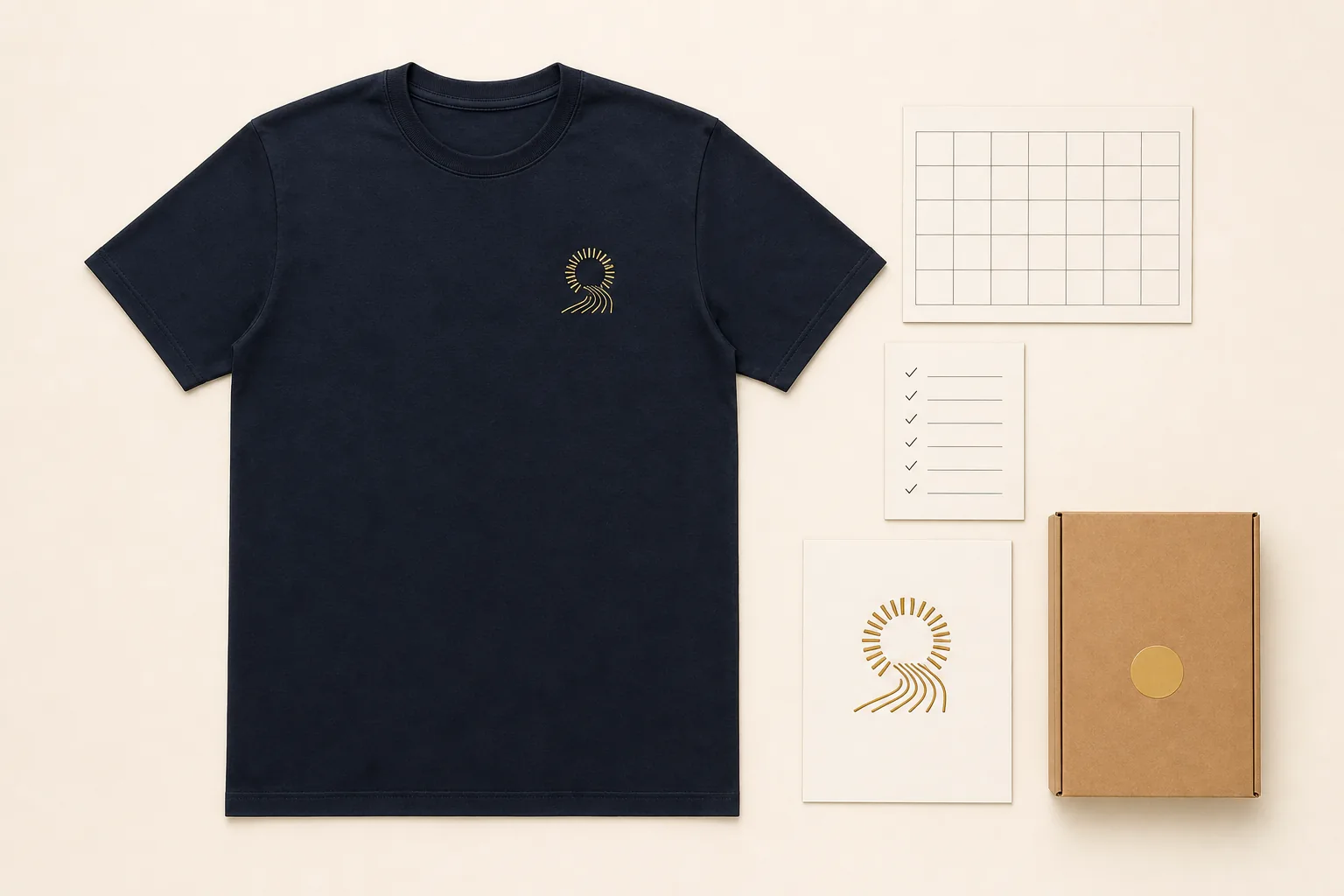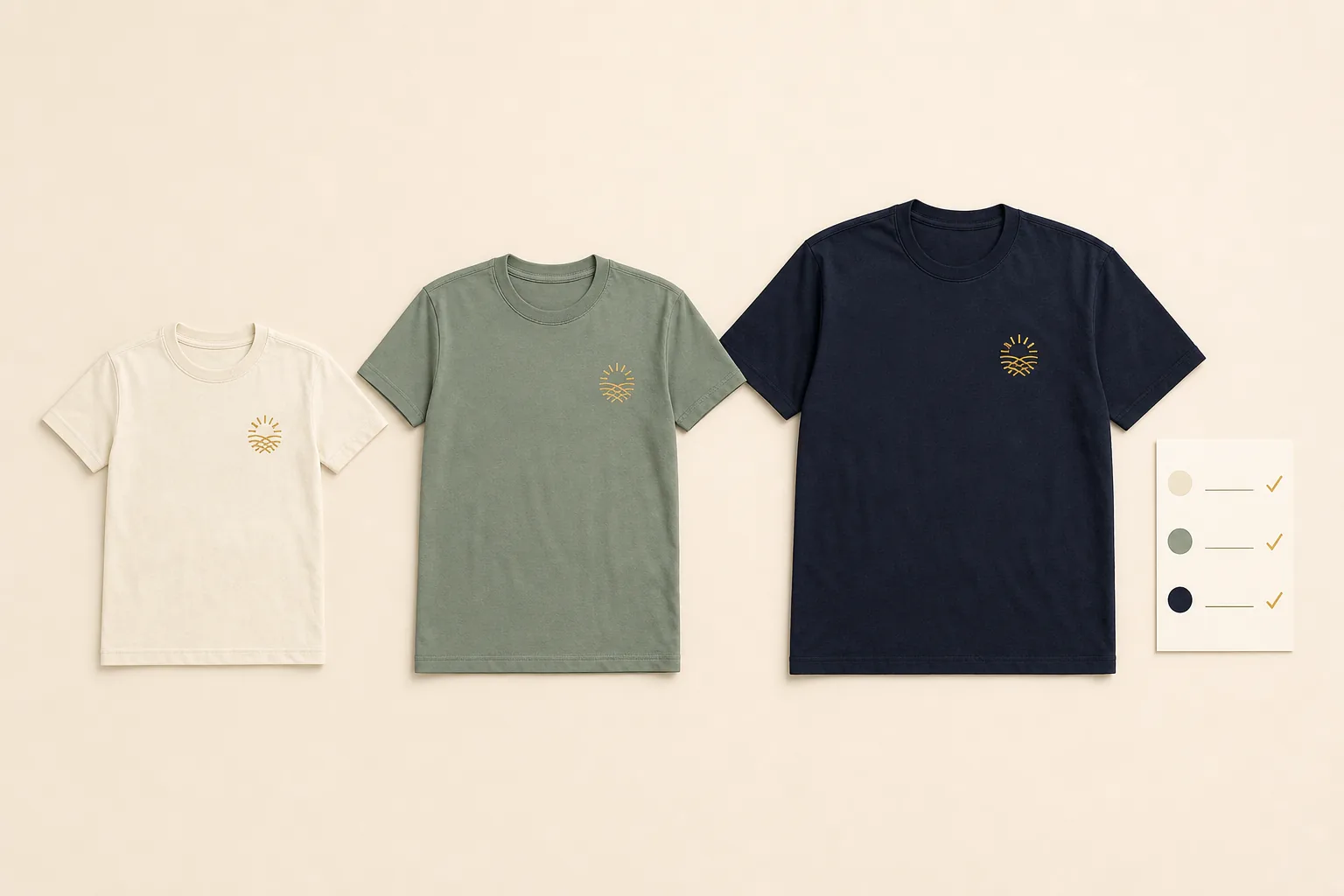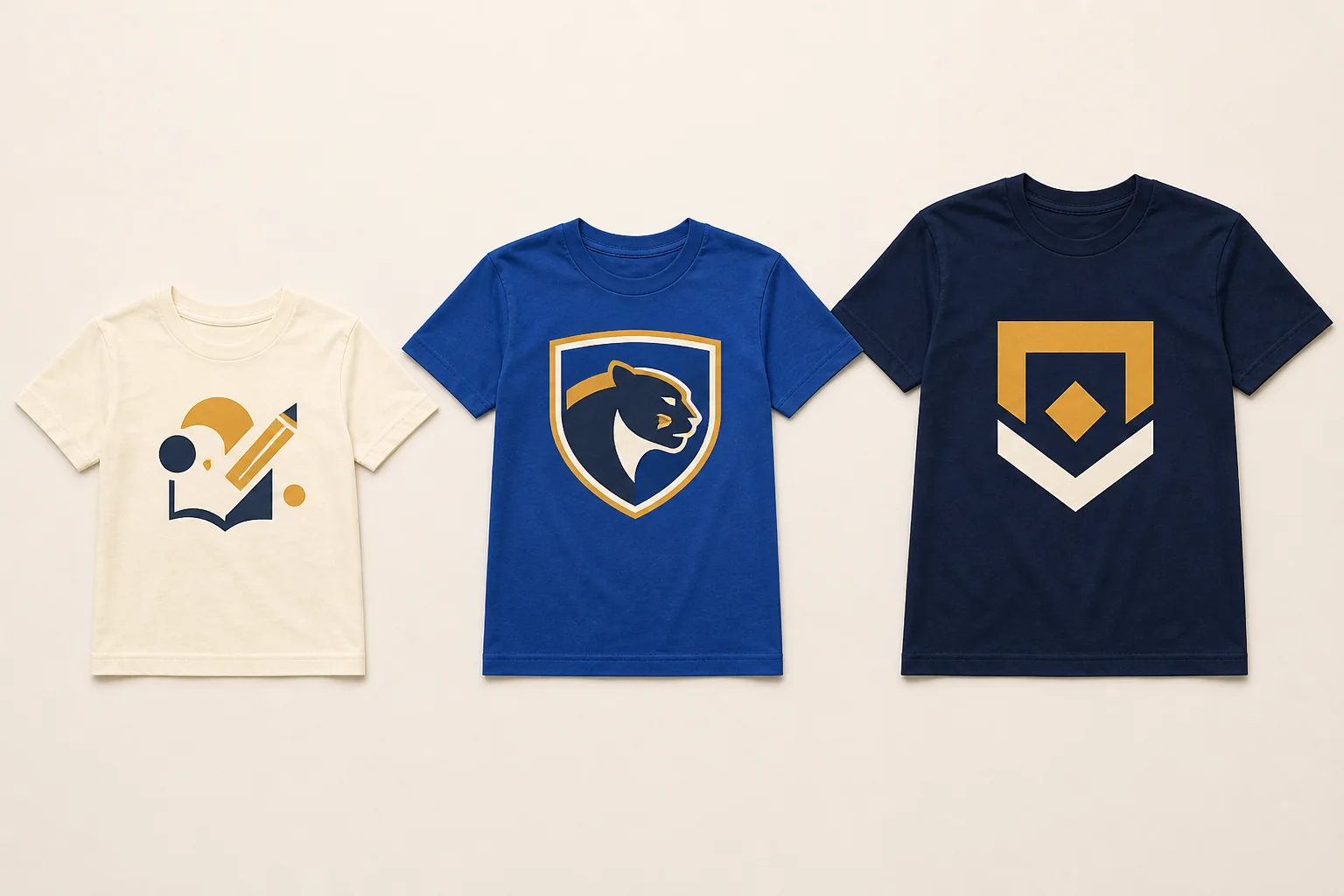
Short answer: Choose one age-appropriate direction—playful and bold for elementary, clean identity-led artwork for middle school, or a year-led design for seniors—then use one controlled vote, one named size list, and a written 5–6 week plan for 50+ pieces.
Designing a class shirt sounds simple until a whole grade has to agree on one garment, color, and piece of artwork. Start with a direction that fits the students, then keep the approval process smaller than the group.
Class shirt ideas by grade
| Grade group | Strong starting direction | Keep it wearable |
|---|---|---|
| Early elementary (K–2) | One playful mascot or academic symbol with the grade or school year | Use one large focal graphic and avoid tiny details |
| Upper elementary (3–5) | A sporty mascot crest, field-trip theme, or class identity | Keep one core mark that can work on youth and adult garments |
| Middle school (6–8) | Promotion year, club identity, or a compact front mark with one larger back graphic | Let students choose between two production-ready mockups |
| High school (9–12) | Graduation year, approved school crest, names inside the year, or a proofread roster back | Keep the year readable and give one person final proof authority |
Before the mockup, confirm who can approve school marks, slogans, and any student names. Use the school or district’s current artwork, privacy, payment, and supplier rules rather than assuming one process fits every campus.
Current Adobe Express school T-shirt examples and Custom Ink’s K–12 graduation-apparel guide also center school shirts on a readable mascot, school identity, class year, or milestone. Use those as idea references—not as permission to reuse protected artwork or skip school approval.
Step 1 — Narrow the shared theme
Strong class shirt themes fall into three buckets:
- Graduation year — “Class of 2027” is clean, timeless, and needs no debate.
- Mascot + year combo — “Eastwood Eagles 2027” works at every grade level.
- Grade motto or inside phrase — something the class genuinely says or that a teacher made famous. These get the most wear because they feel personal.
Avoid tiny details, low-contrast text, or too many competing elements. Gradients can work with digital full-color printing, but the school name, class year, or mascot still needs to read clearly from a few feet away.
For a graduating class, compare the dedicated Class of 2027 senior shirt and hoodie route and the graduation shirt ideas and 6–7 week timeline before the vote so students react to one realistic garment plan rather than unrelated screenshots.
If the class is leaning toward fleece, use the Class of 2027 hoodie design ideas to narrow the vote to a large year, names inside the year, a varsity crest, a sleeve detail, a minimalist chest mark, or one mascot back print.
Step 2 — Collect input fast (without a committee nightmare)
Choose one review method:
- School-approved two-choice form: useful for middle or high school; set one closing date and count one result.
- Classroom vote between two mockups: useful for elementary or middle school; a teacher records the final choice.
- Student-representative review: useful for a large high-school cohort; one design lead consolidates feedback.
Limit choices upfront. Asking “what color do you want?” produces chaos. Asking “navy or royal blue?” produces a winner.
Step 3 — Handle the artwork
Three paths:
- You have artwork — send a vector SVG, PDF, or EPS when possible. For a PNG or JPG, export at roughly 300 pixels per inch at the intended print size (for example, about 3,000 pixels wide for a 10-inch print).
- You have a sketch or rough idea — describe it to your supplier. For a Togethread request, the designer reviews the complete brief and confirms first-mockup timing and included design support in writing.
- You want a starting point — browse the school and class design ideas, then swap in your school name, year, colors, and shared details.
Review the garment, artwork placement, color, written quote, revision scope, and schedule before approving the deposit or production.
Step 4 — Size the order and collect money
- Confirm the exact garment first. Use the selected blank’s own body-width and body-length measurement chart; the same letter size can measure differently across a tee, hoodie, youth style, or performance shirt.
- Collect one named response per student. Record the garment, color, size, and payment status. Review the smallest youth and largest adult or extended sizes before closing the list instead of copying a generic grade-level ratio.
- Reconcile the count. The named rows, staff quantities, and any intentionally planned inventory should add up to the production total. Keep missing replies visible rather than silently estimating them.
- Use a school-approved payment route. Set one deadline and confirm which payment methods the school or PTA allows before collecting money.
Togethread quotes start at 50 coordinated pieces. Mixed sizes can count toward that total, but garment, color, youth or extended-size availability, decoration, and any price difference are confirmed in the written quote. Use the 50-versus-100 shirt cost guide to compare the complete order total at the actual quantity. Put extra shirts in a separate inventory row only when late enrollment, prior sell-through, a reusable undated design, or an approved school budget gives them a clear job. Choose those sizes from actual responses or recent order history—not a blanket M/L assumption.
Step 5 — Submit and confirm the timeline
Togethread’s standard approval-to-door planning range is 15–20 business days after the mockup, exact size list, written quote, deposit, and delivery plan are approved. Work backward from the event or last day of school and start about 5–6 weeks in advance so voting, missing replies, school approval, production, and distribution all have room. Use the event ordering-date guide to map those checkpoints, then use the date confirmed in writing for the actual order.
Quick-start checklist
- □ Theme and color voted on
- □ Artwork file ready (or brief written)
- □ Size quantities collected
- □ School-approved payment and receipt route confirmed
- □ School marks, wording, and any student names approved
- □ Brief started about 5–6 weeks before the needed date
- □ Mockup approved
How Togethread helps
For a coordinated request of 50+ pieces, Togethread can turn a clear brief or sketch into a first mockup before order approval. The designer confirms timing, included design support, revision scope, garment, artwork size, placement, size mix, personalization, and price in writing before the deposit. Standard DTF full-color printing does not require a separate screen for every artwork color, but the complete quote still depends on the selected garment and order scope. You also see finished production photos before the balance is due. Compare school spirit wear options; the written quote confirms the destination, freight, duty and tax scope, delivery plan, and any exceptions.
FAQ
How many design revisions do I get? You review the first mockup and can send one consolidated set of feedback before approval. If the direction, garment, or artwork scope changes, confirm the next round and schedule with the designer in writing.
Can different students get different shirt colors? Sometimes. A coordinated color split depends on the selected garment’s stock, the quantity in each color, decoration method, and whether the artwork stays consistent. Put the proposed split in the roster and approve the available colors, pricing, and minimums in the written quote.
Can we print every student’s name on the back? Only after the school approves the use and release of the final list. Give one organizer the master roster, proof every spelling twice, show the complete back layout in the mockup, and lock the approved file before production.
What if a few students don’t pay in time? Close the named list at the published deadline and keep unpaid rows separate from approved production. The organizer can extend the deadline, cover specific students from an approved fund, or revise the count before approval. Do not turn missing payments into speculative inventory unless the school accepts that budget and resale risk.